M. Naidu
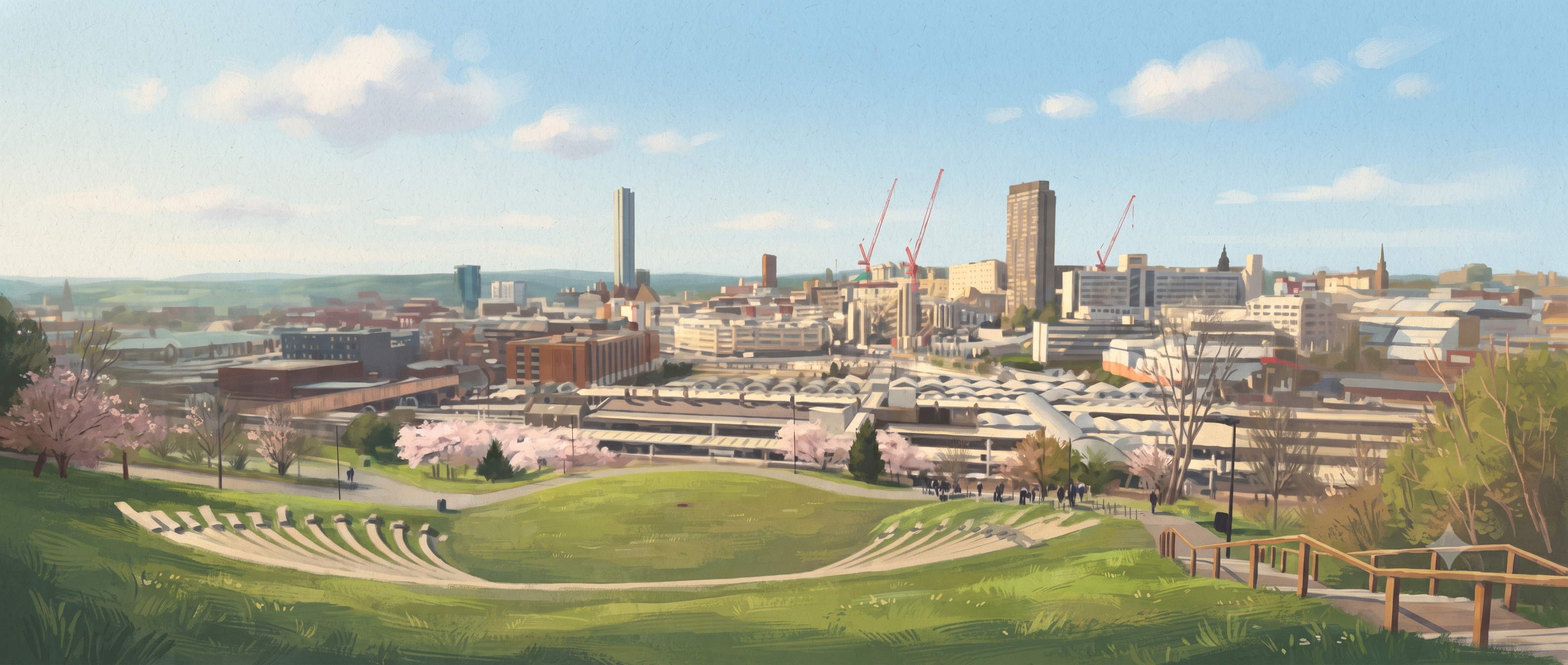
FR 01 · Sheffield
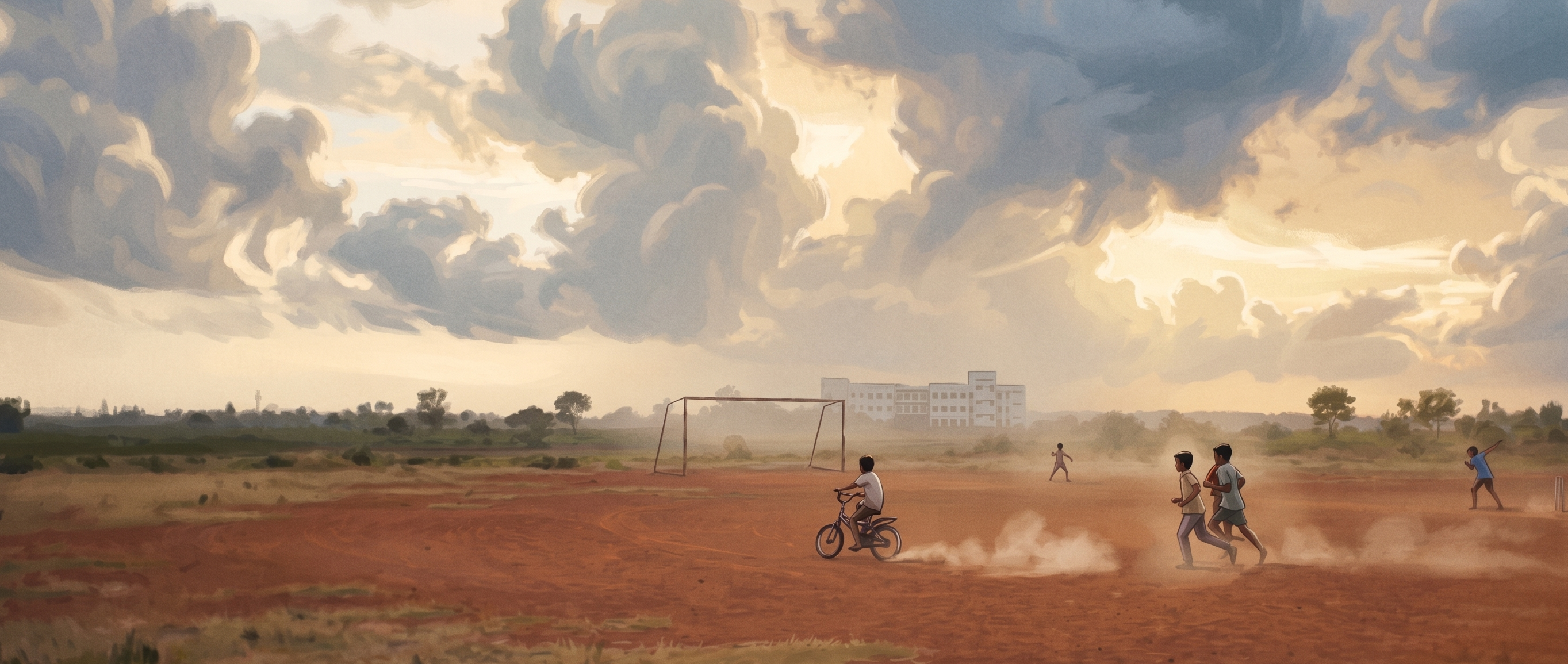
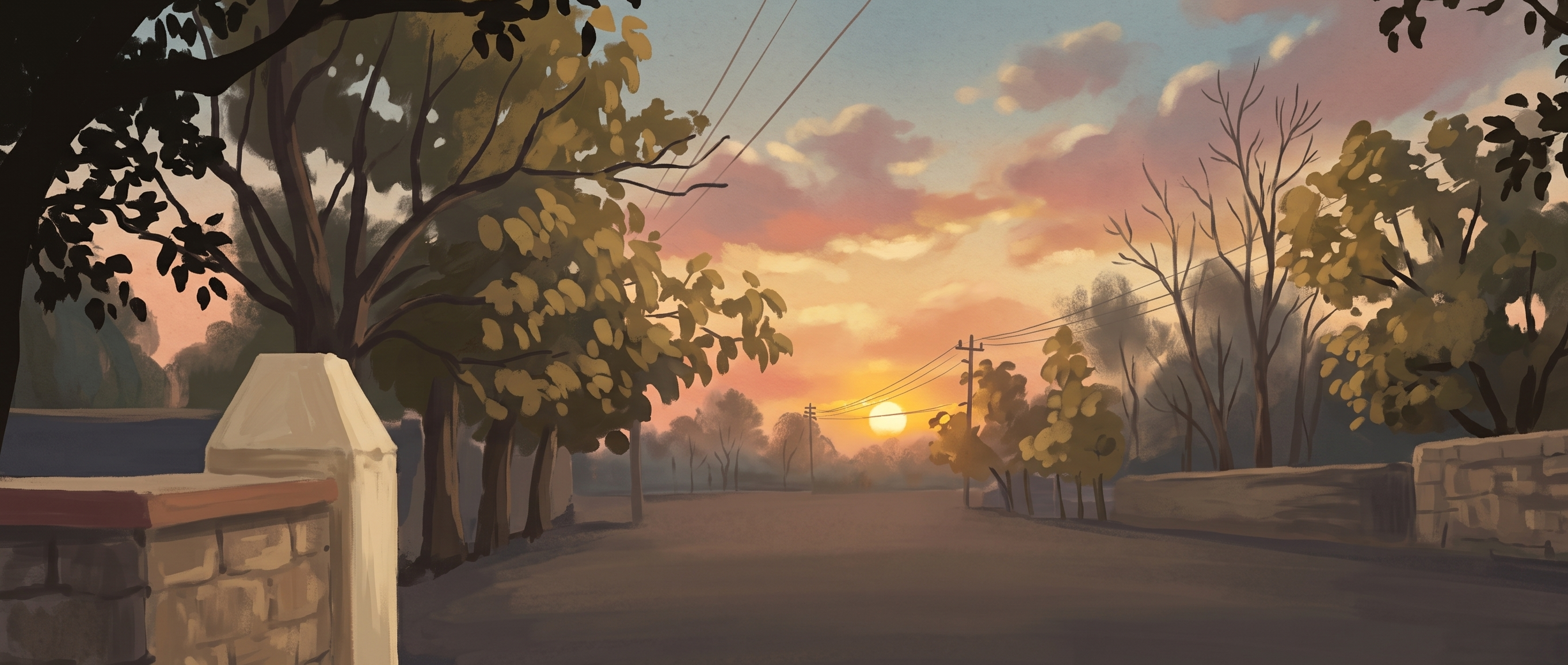
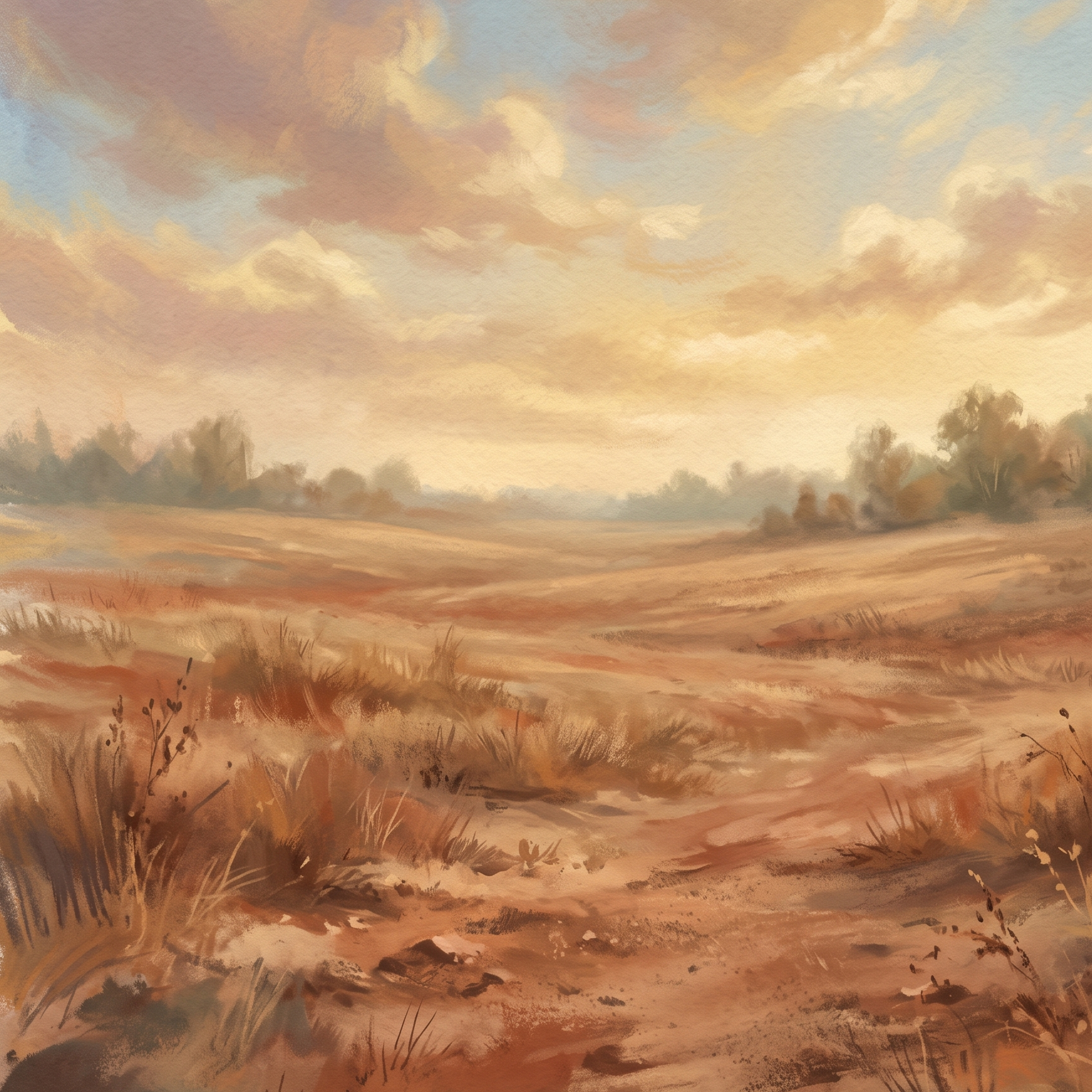
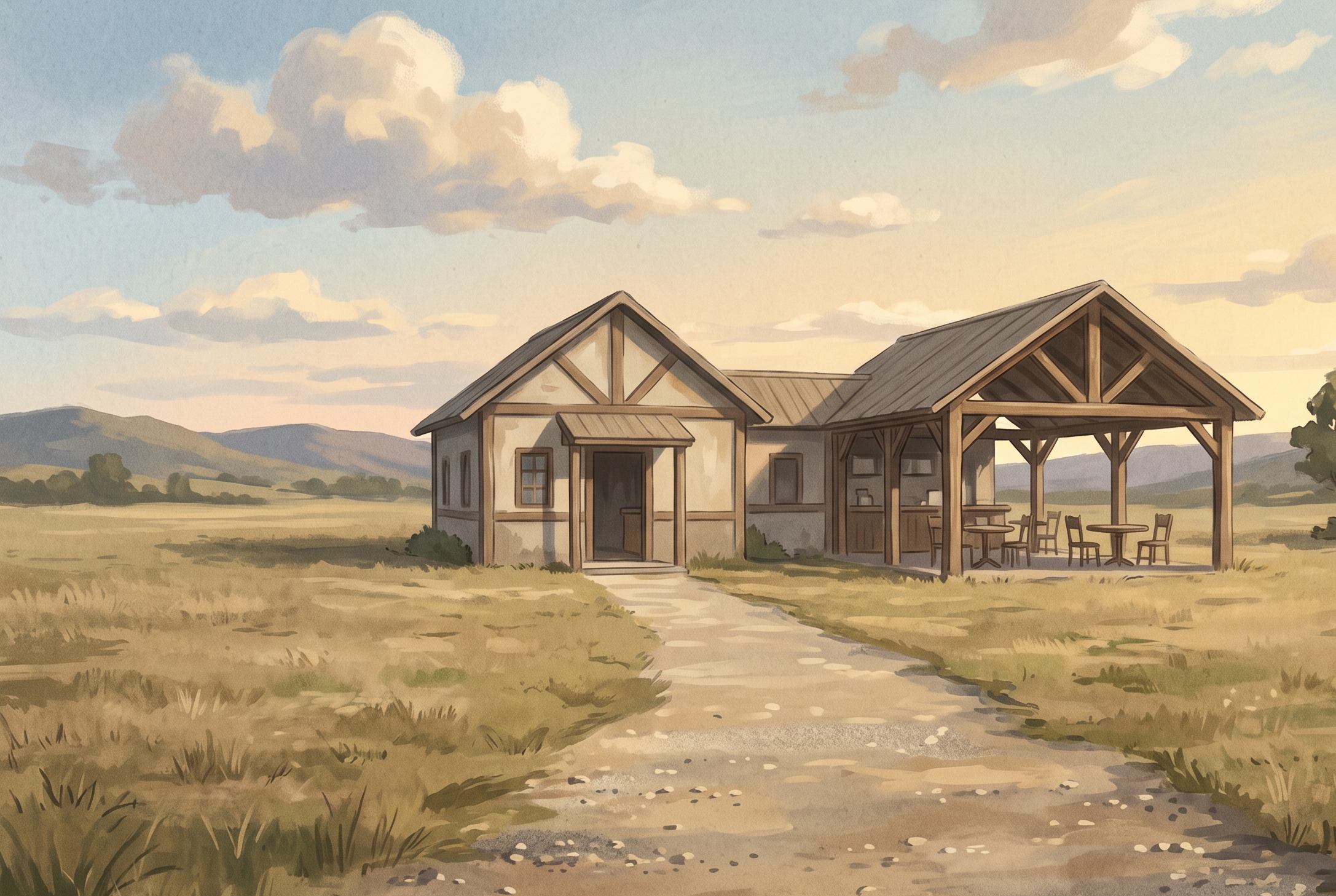
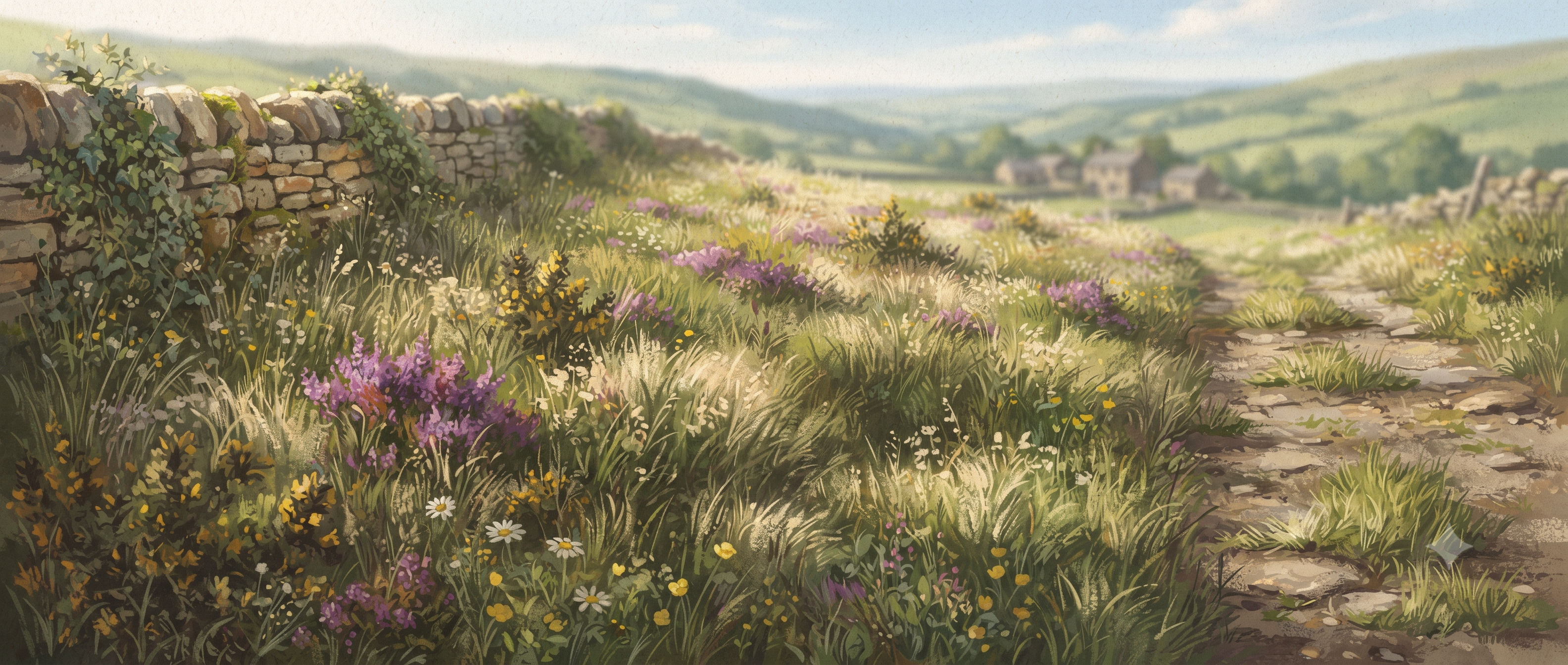
Hindupur, 2001. Where I was born, but never really lived.


My parents are still there. So is Michael. It's still the answer when someone asks where home is.
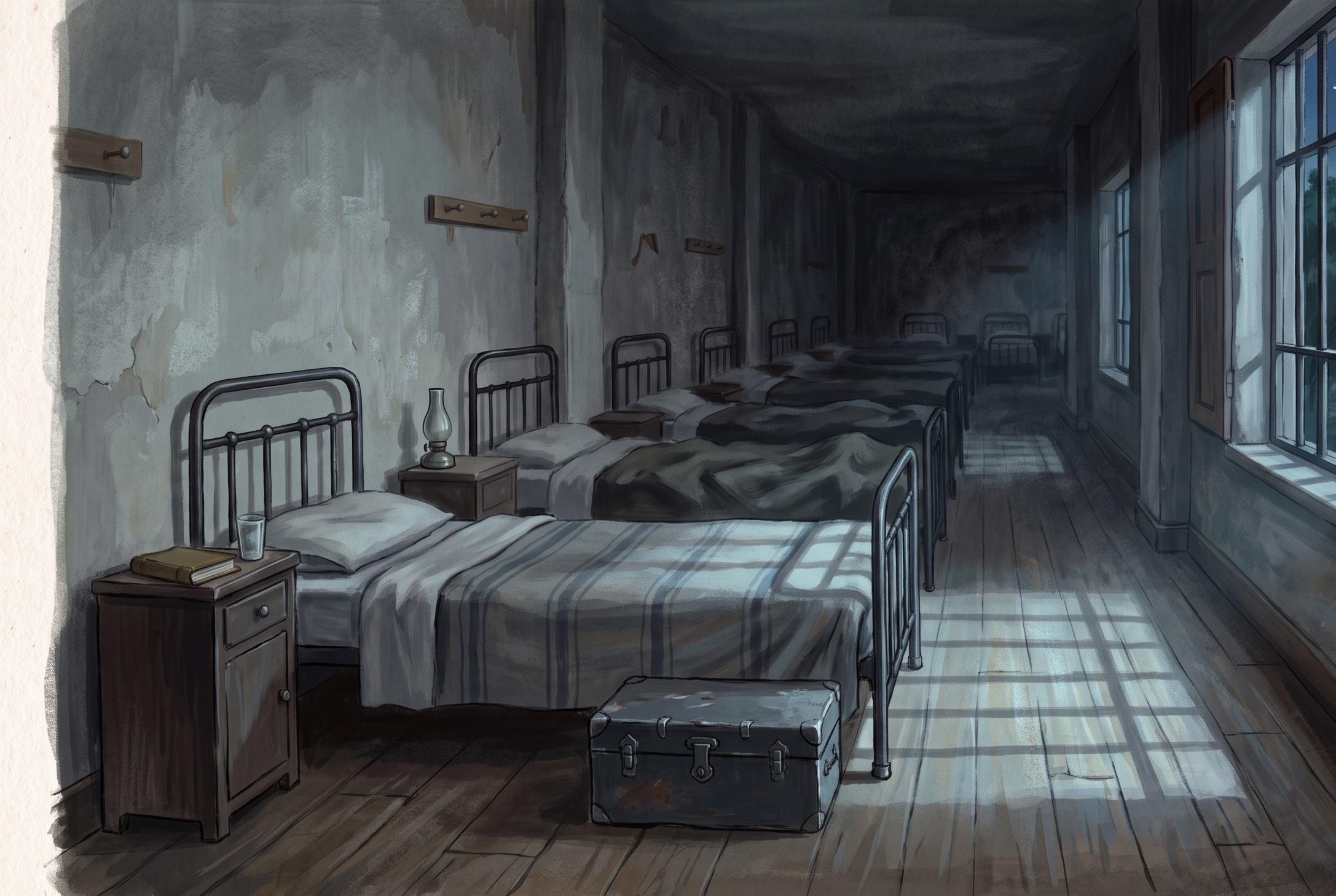
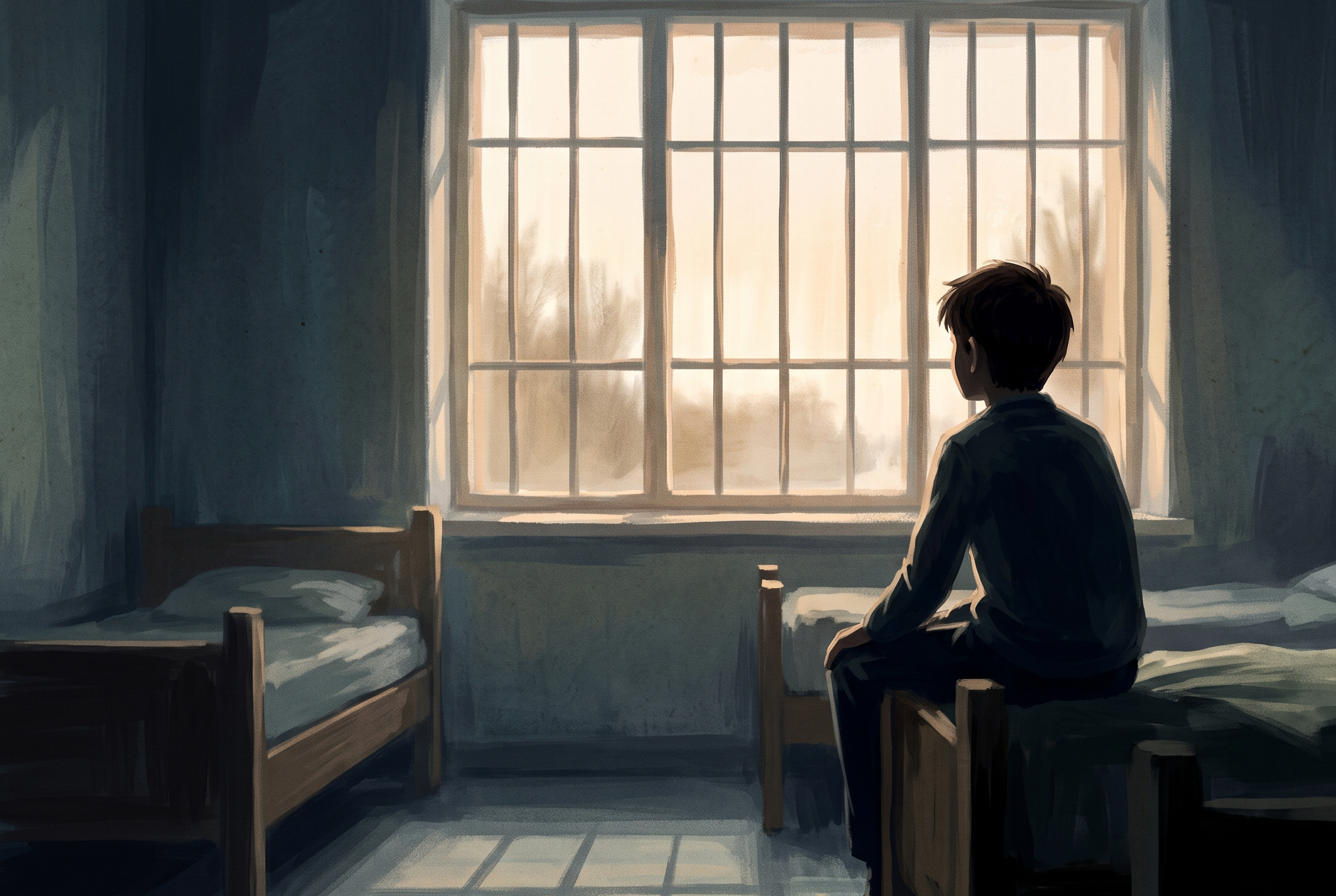
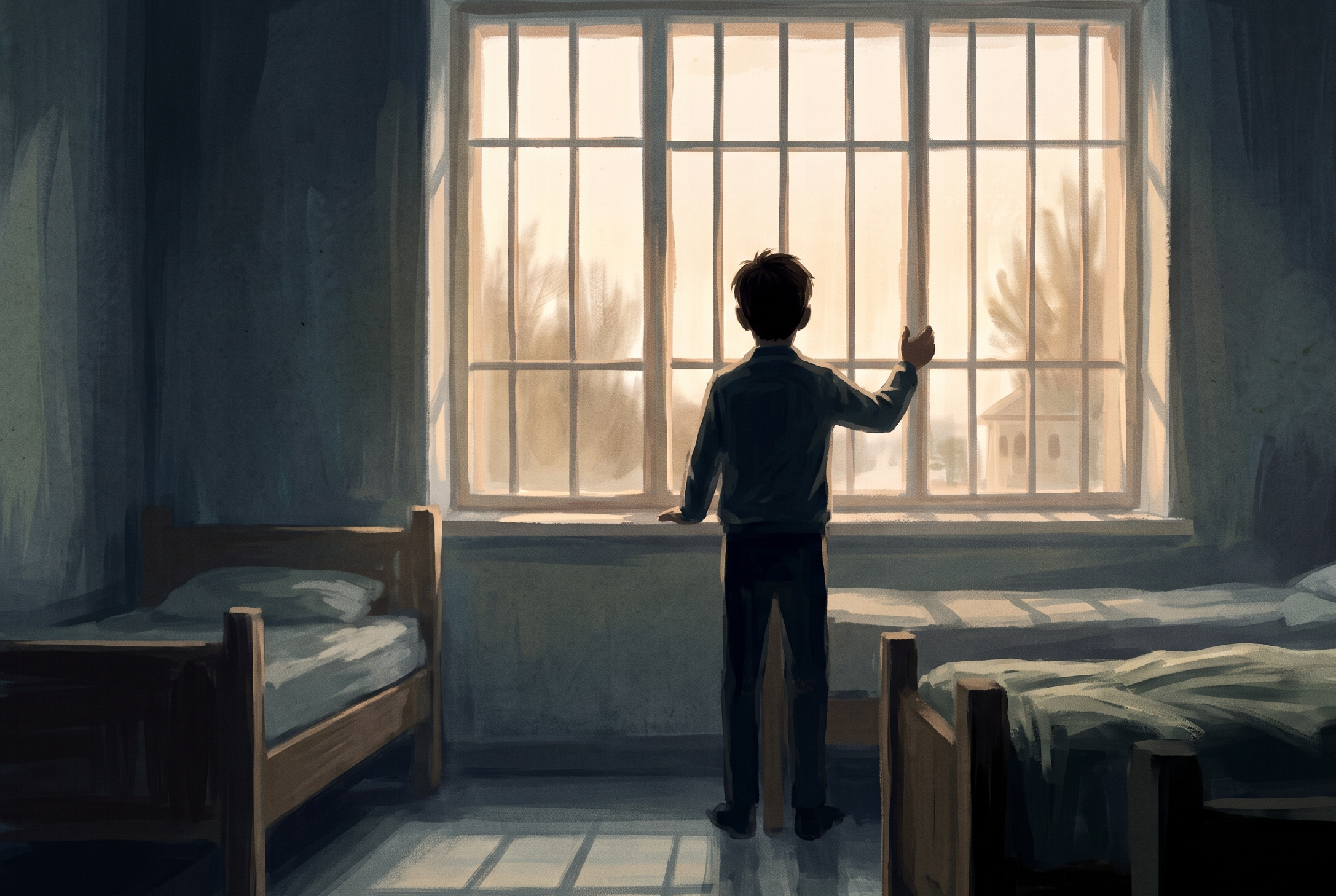
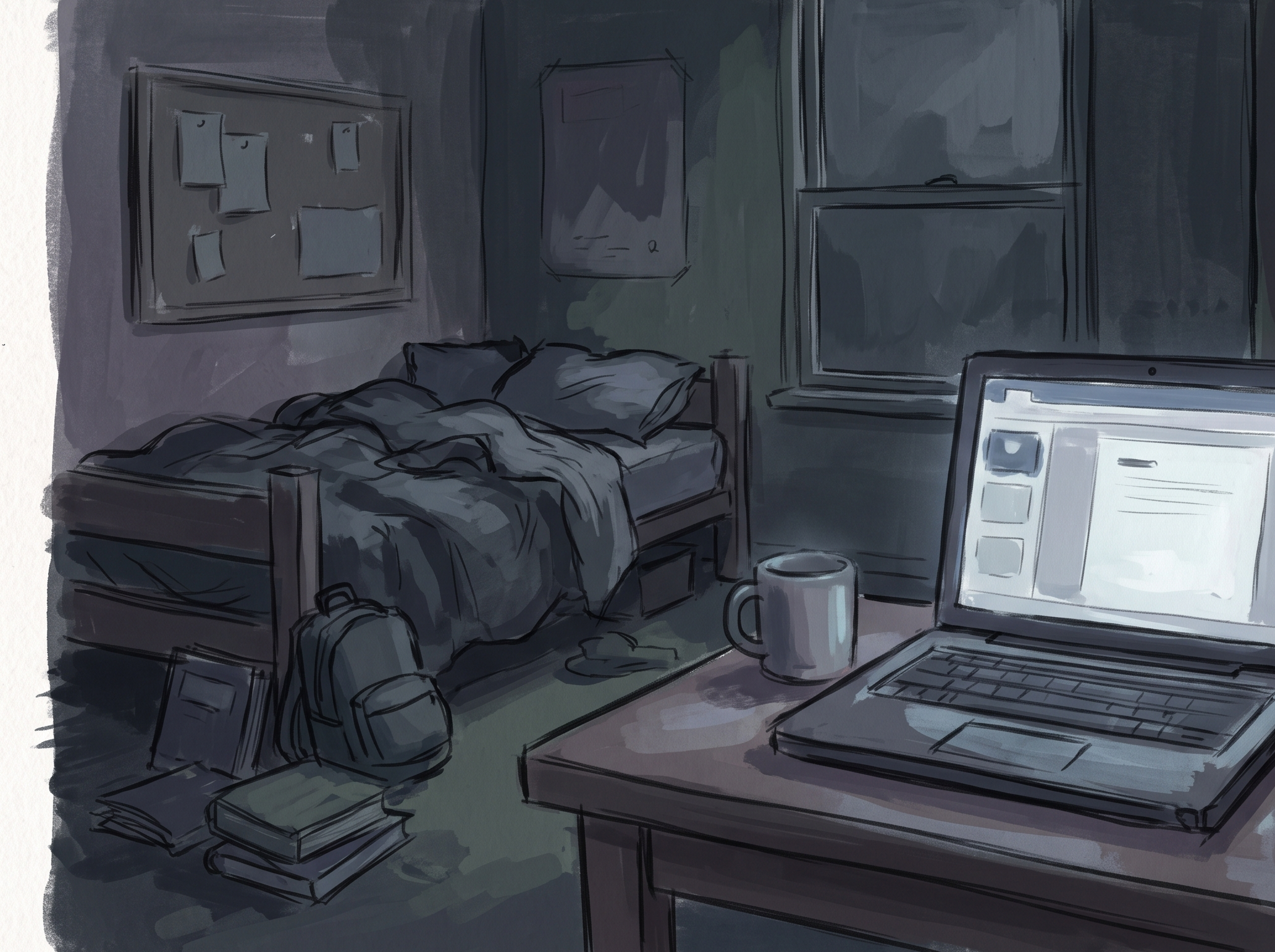
I cried more than I'd like to admit, for longer than I'd like to admit.


Somewhere in those five years, the homesickness turned into something else. I learned how to be on my own without feeling alone.
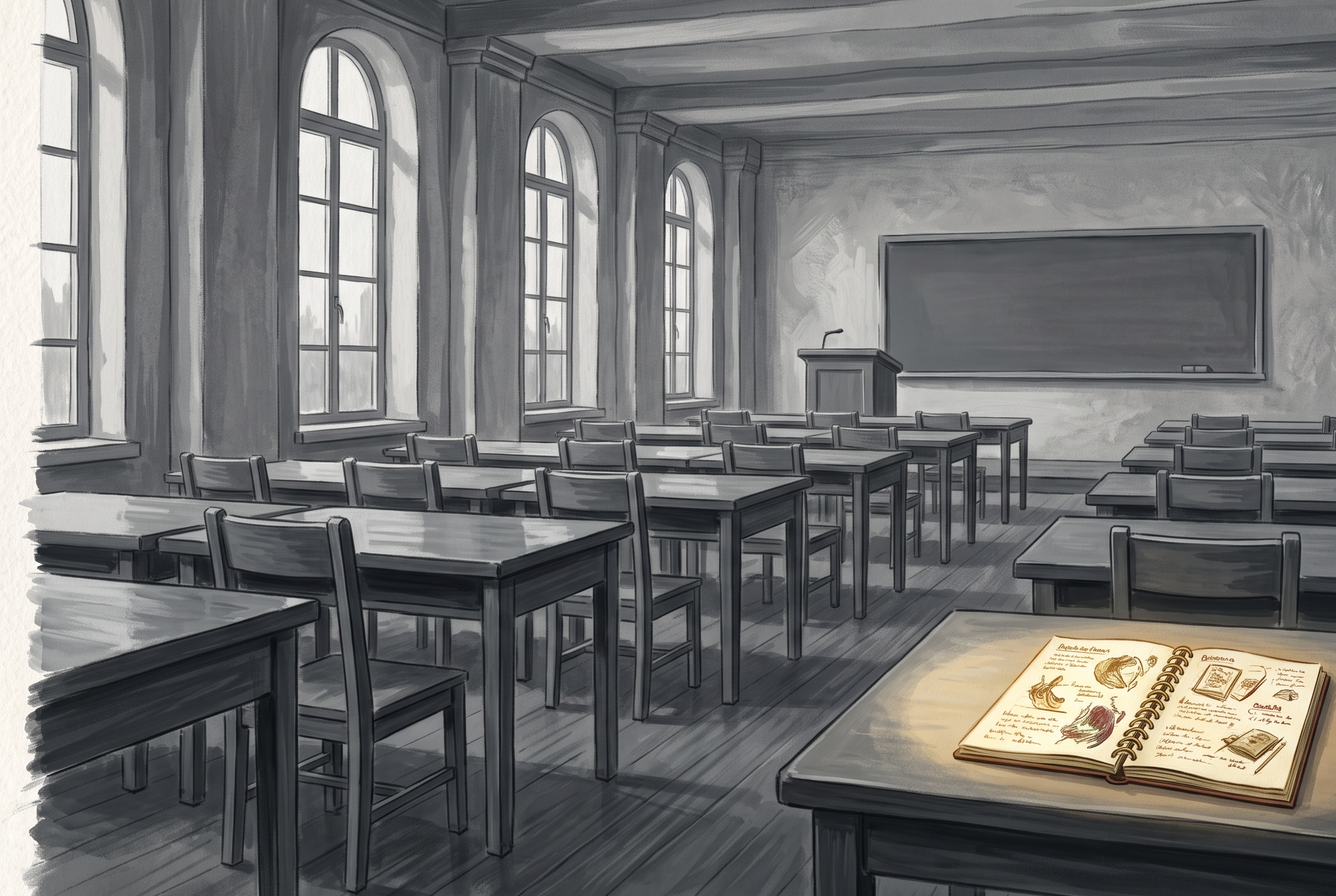
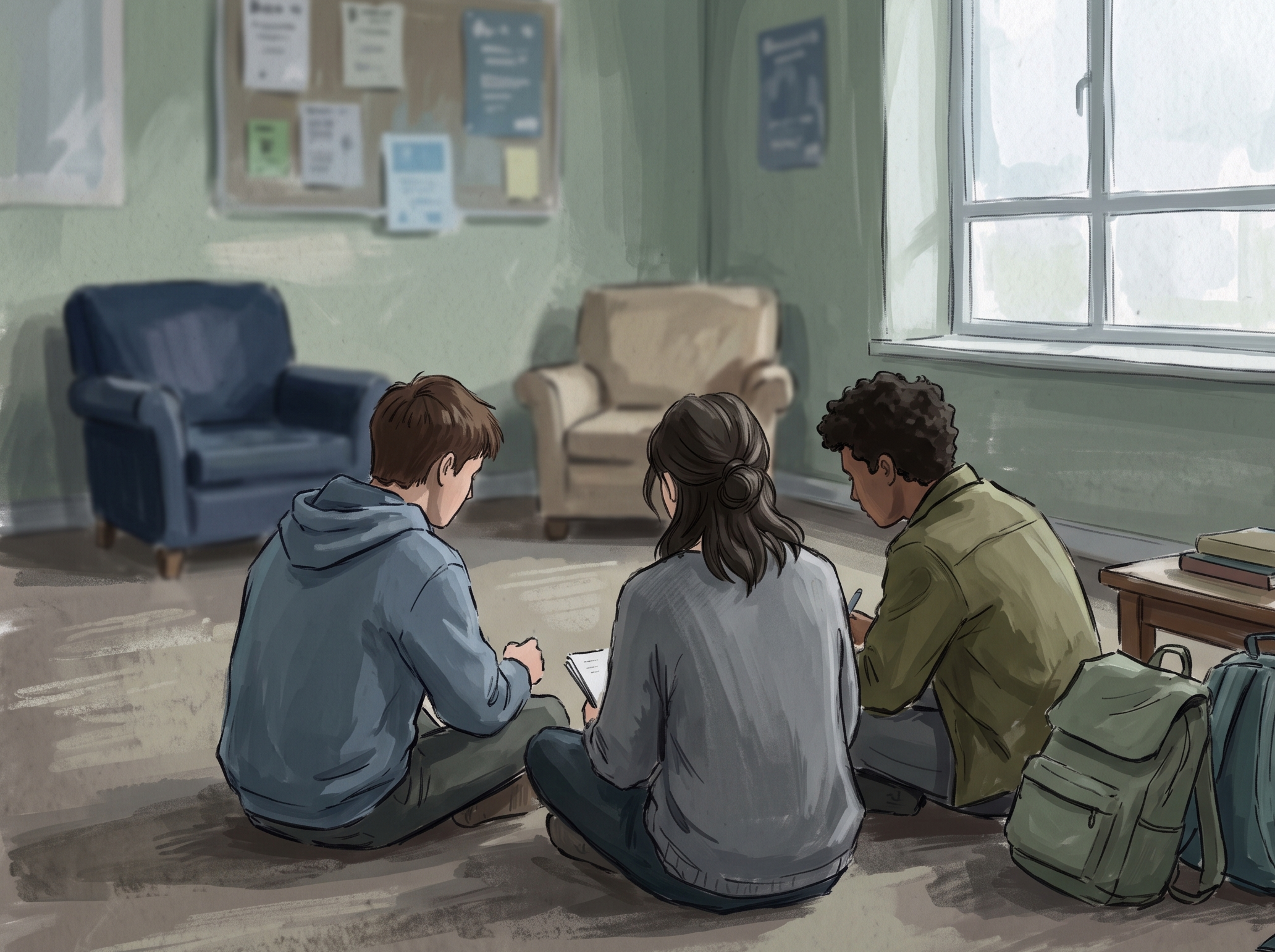
Some nights we studied. Most nights we didn't.
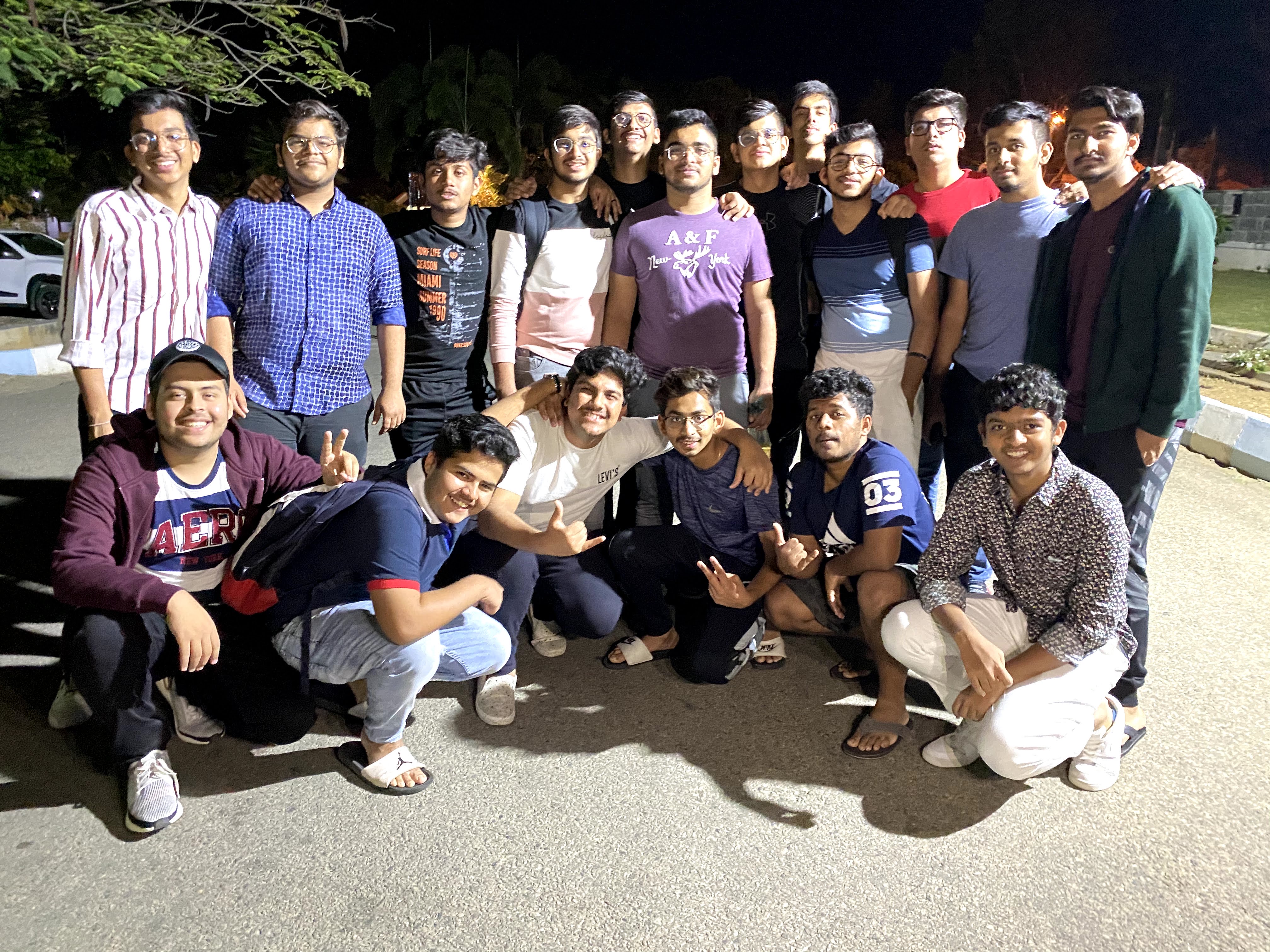
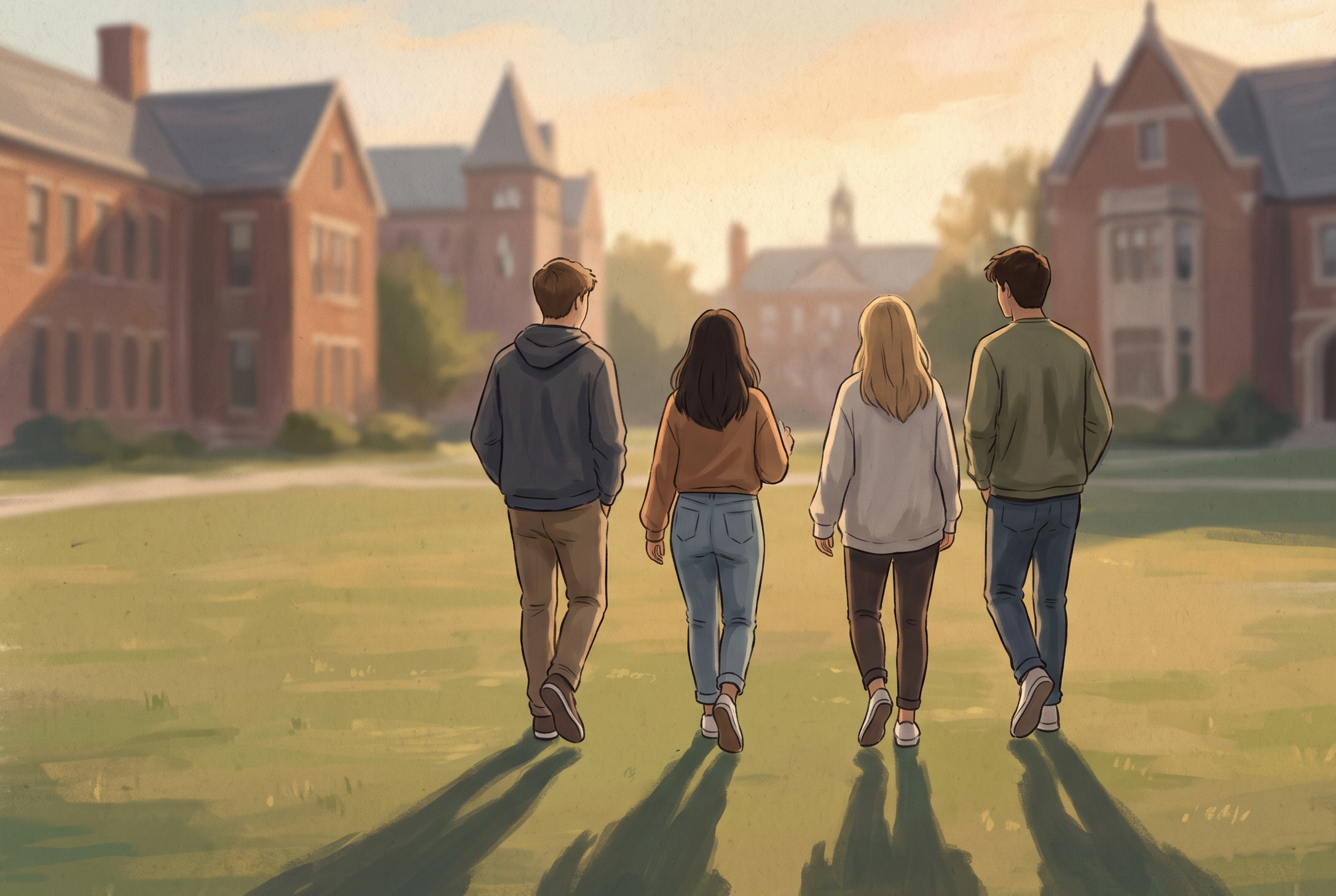
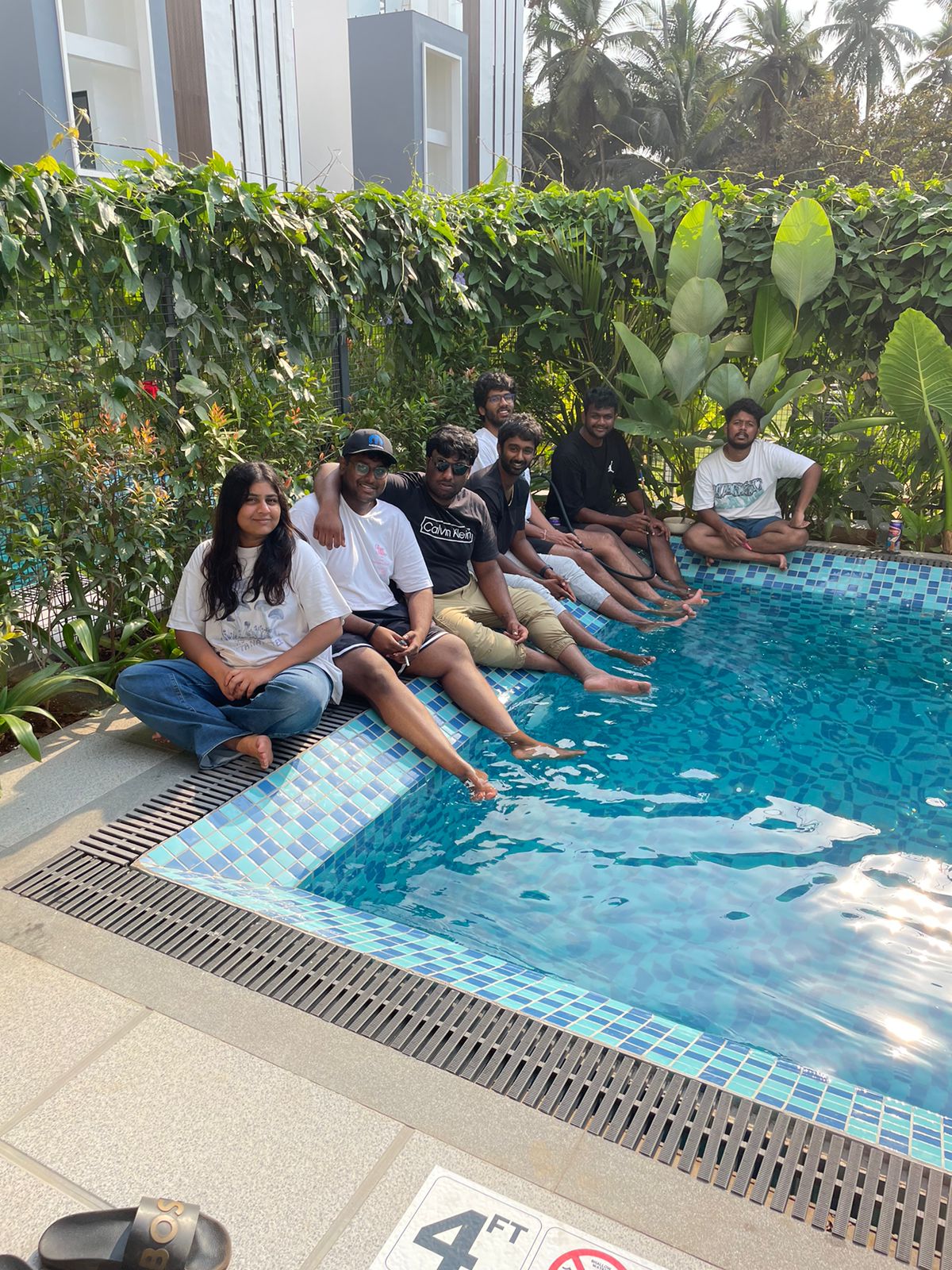
The friendships that became family were built here.

Twelve years of boarding school, and then somewhere completely different.


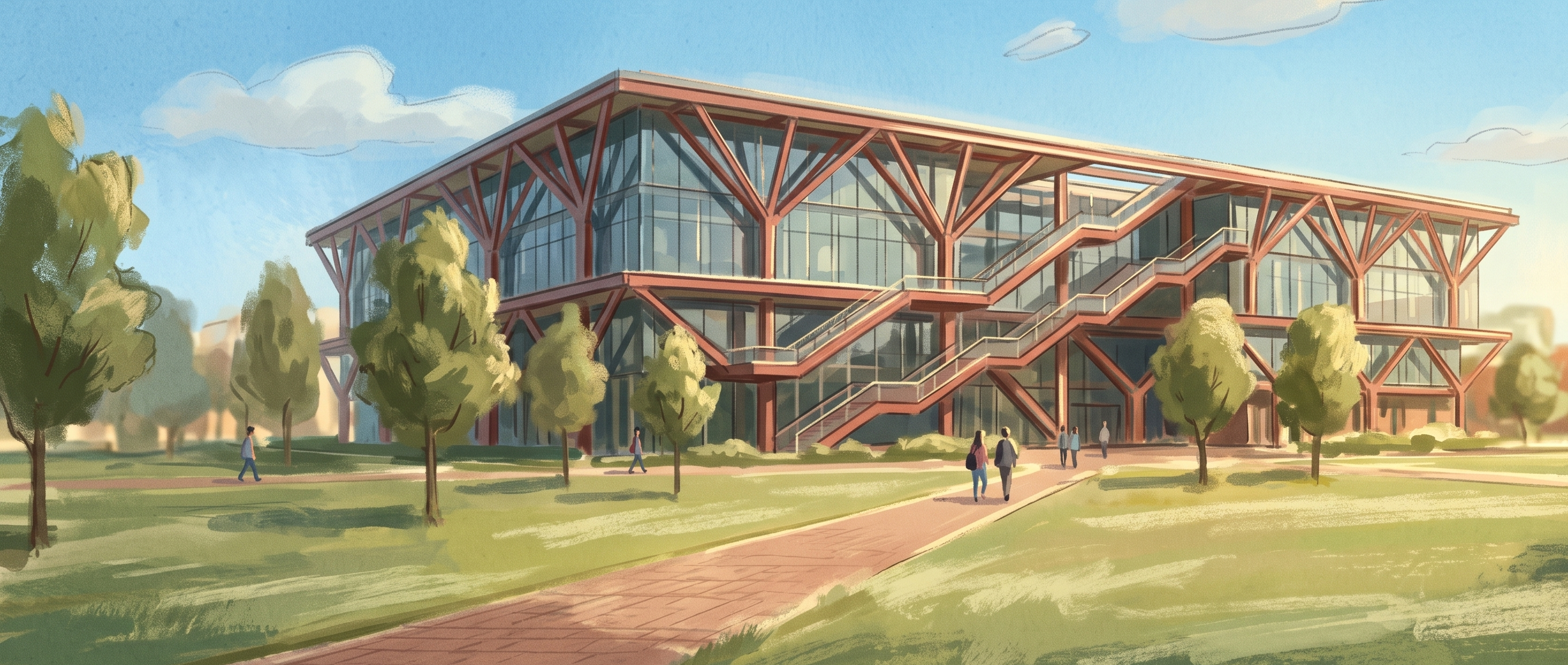
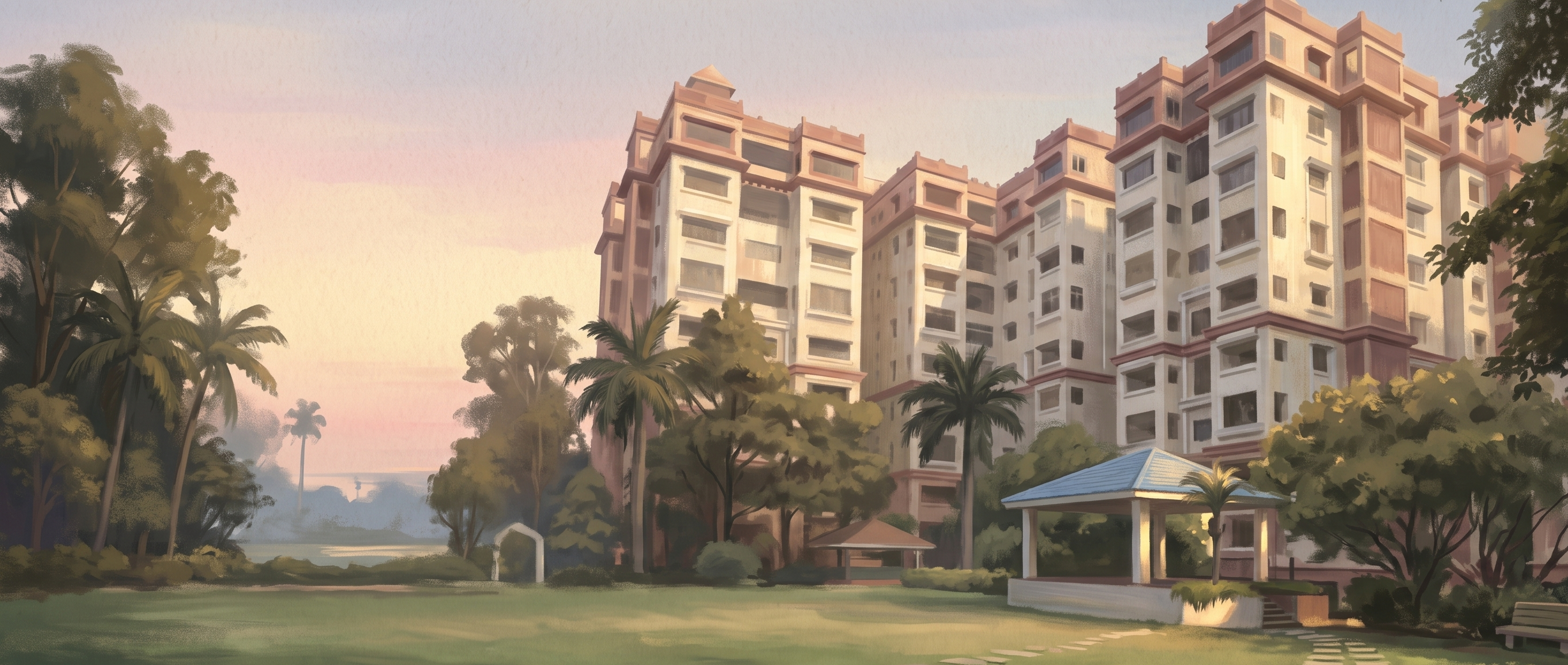
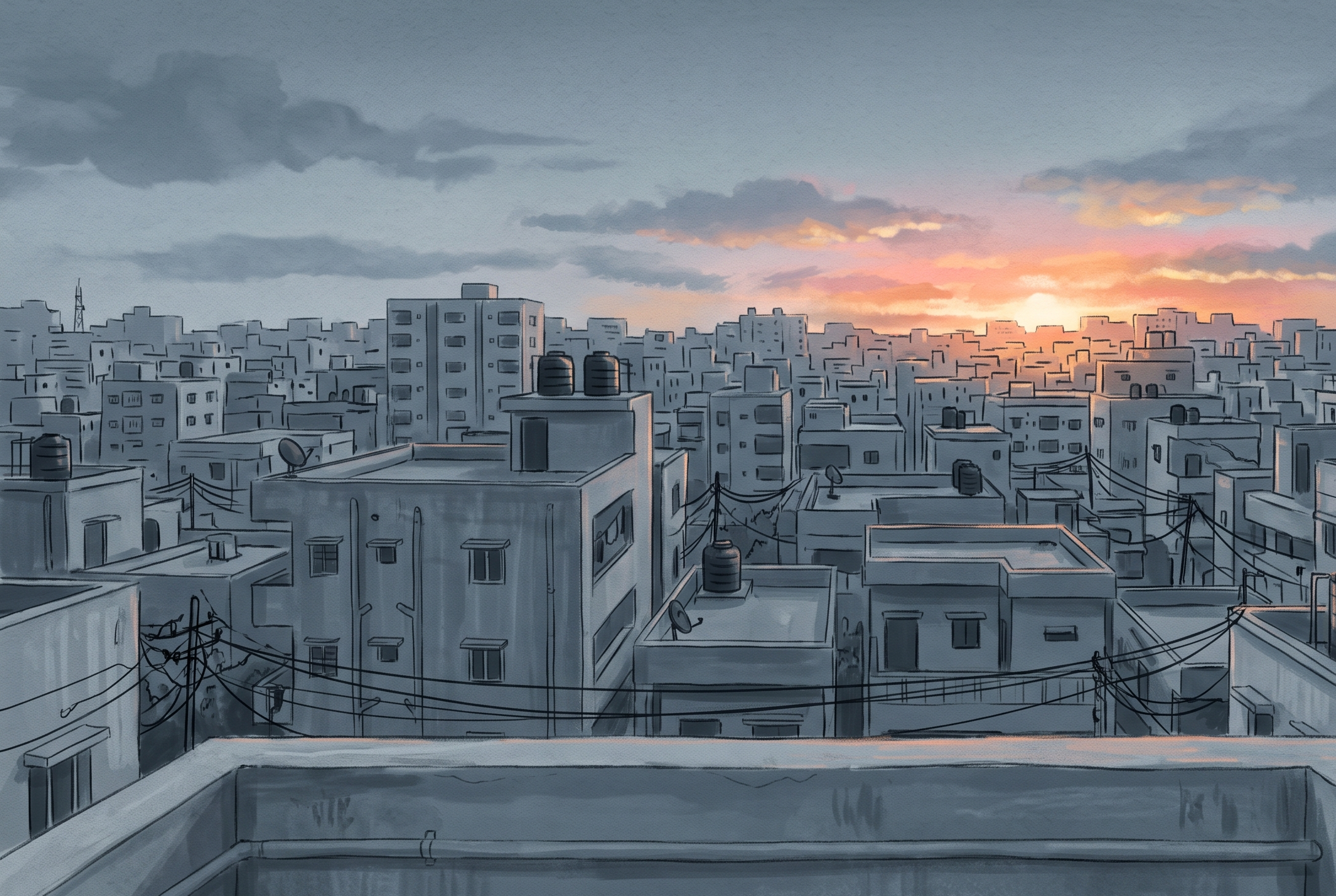
Hyderabad, again. 2023–2025.


Turned out I loved it — planning, building, making something real.

I left all of that voluntarily to chase something bigger. I still don't know if that was brave or stupid.

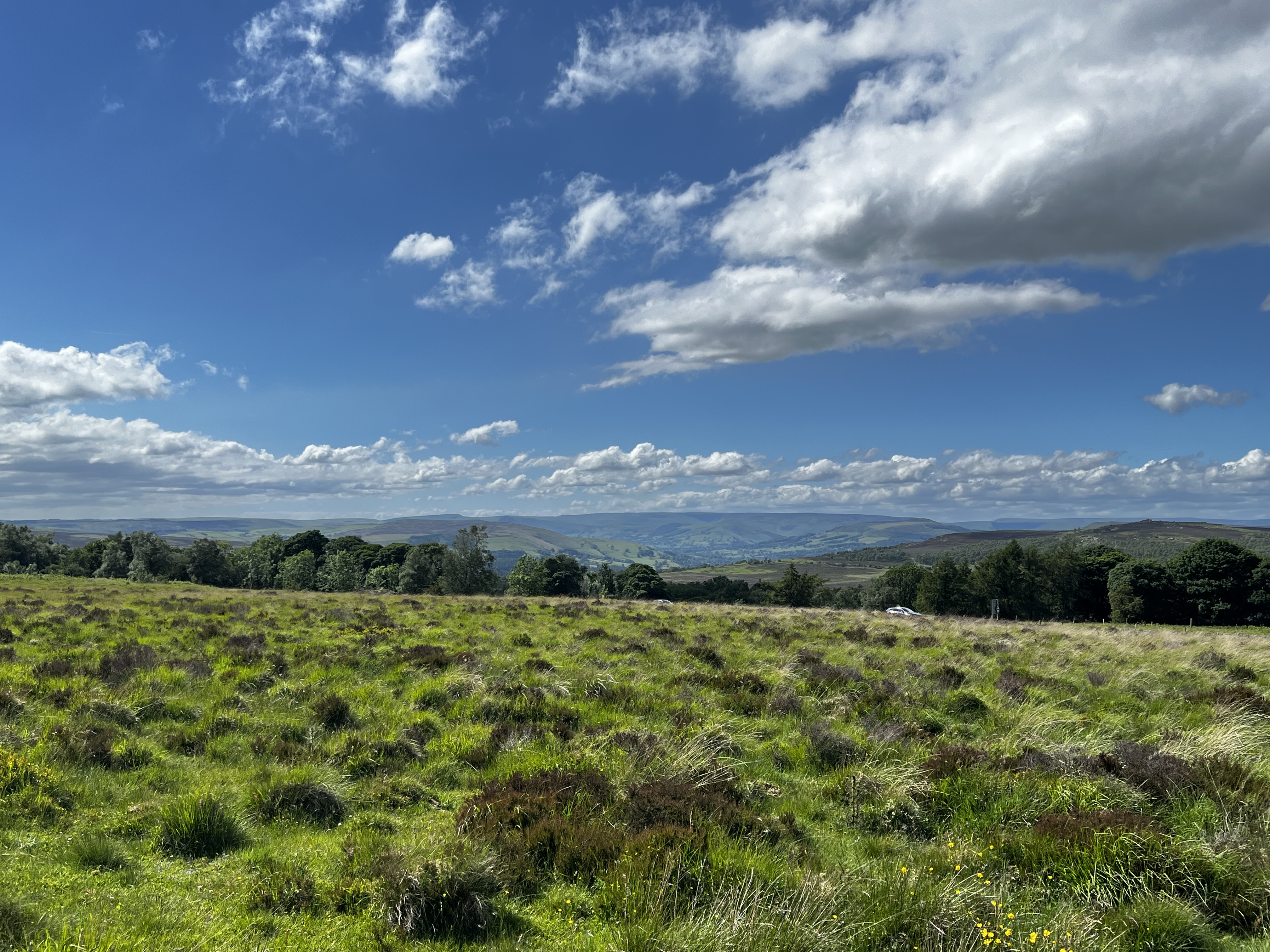
Warm in a way that sneaks up on you.


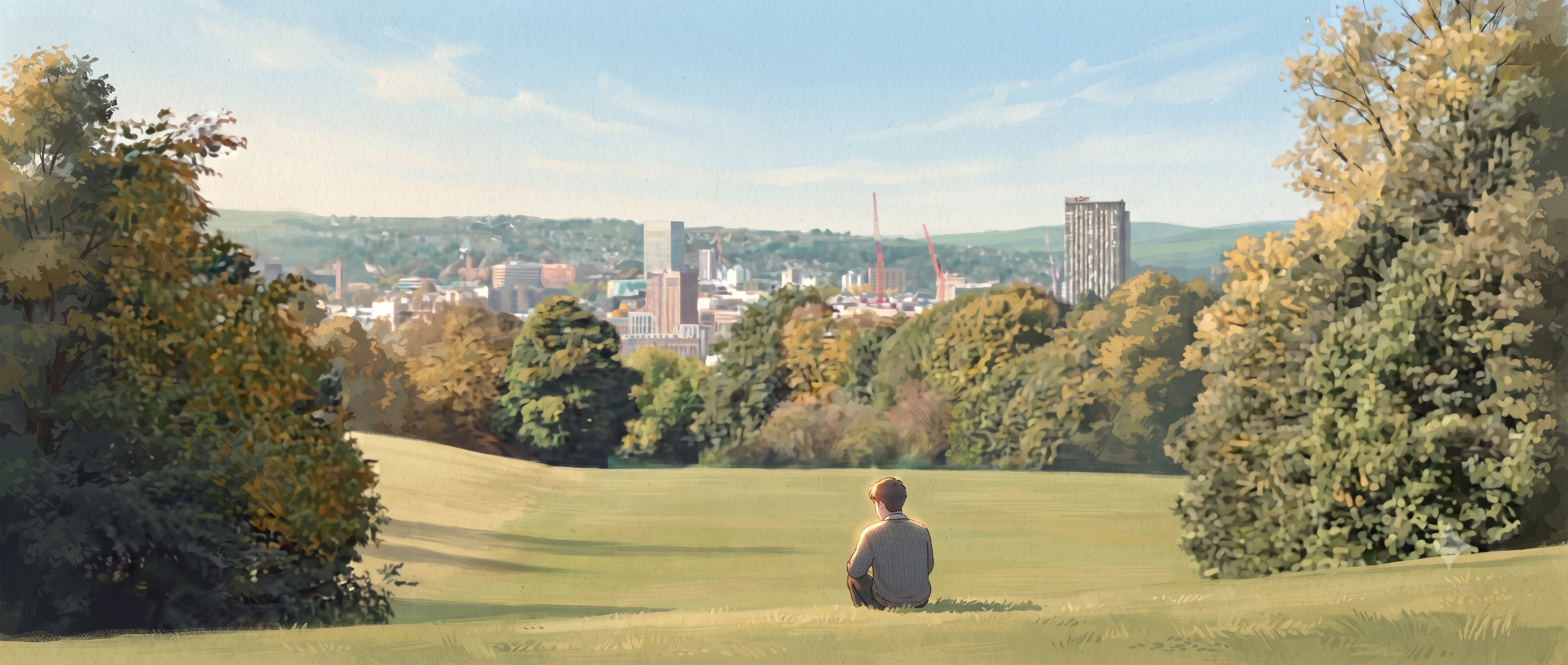
Michael's six thousand miles away. That's the hardest part.

New frames from wherever I am now — on Instagram.
Follow @mn.naidu.07 →Surveyed and interviewed 100+ students to find out what actually drives a luxury purchase. The honest answer wasn't status — and that's what made it worth writing up.
Diagnosed why Sheffield's last independent department store can't reach its next generation of customers — through 118 posts, two floor interviews, and one very telling follower count.
Currently researching how escalating AI personalisation affects brand trust among young UK adults. Coming September 2026.
Luxury spending among young adults has exploded — the global market went from $20 billion in 1985 to over $240 billion within three decades, and students are an increasingly large part of that curve. I wanted to know what's actually driving it. Status? Self-image? Culture? Or something quieter that marketers keep missing?
I didn't want opinions. I wanted patterns — so I built a mixed-methods study that could catch both.
Every question mapped to one of three forces: what satisfies me (intrinsic), what impresses others (extrinsic), or what my culture taught me to value (cultural). Surveys find the pattern. Interviews explain it. I needed both, because people are more honest in conversation than in a form.
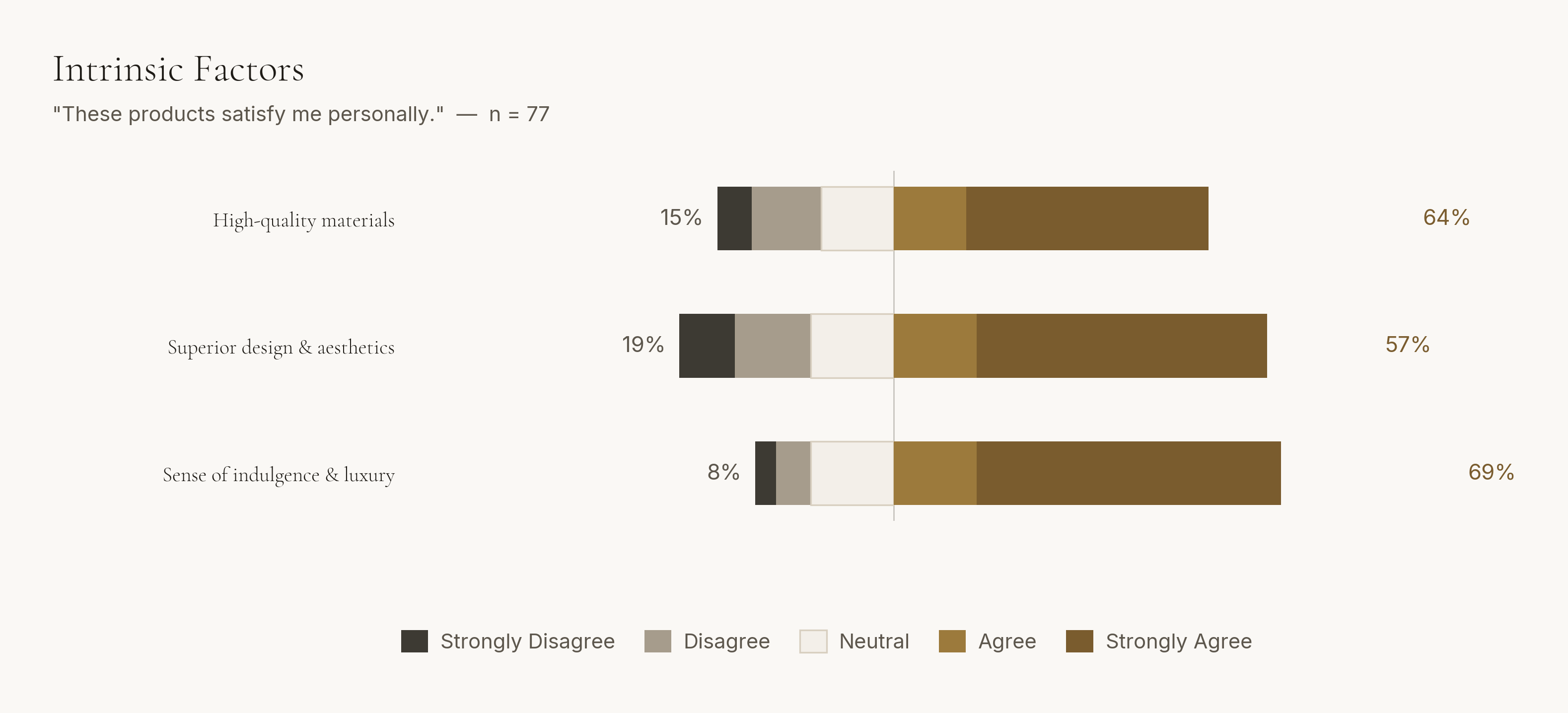
Three forces, three charts. Here's how each one actually performed.

Quality and indulgence won, decisively. Roughly 7 in 10 respondents said a product's craftsmanship and the feeling it gave them mattered more than anything else about it.

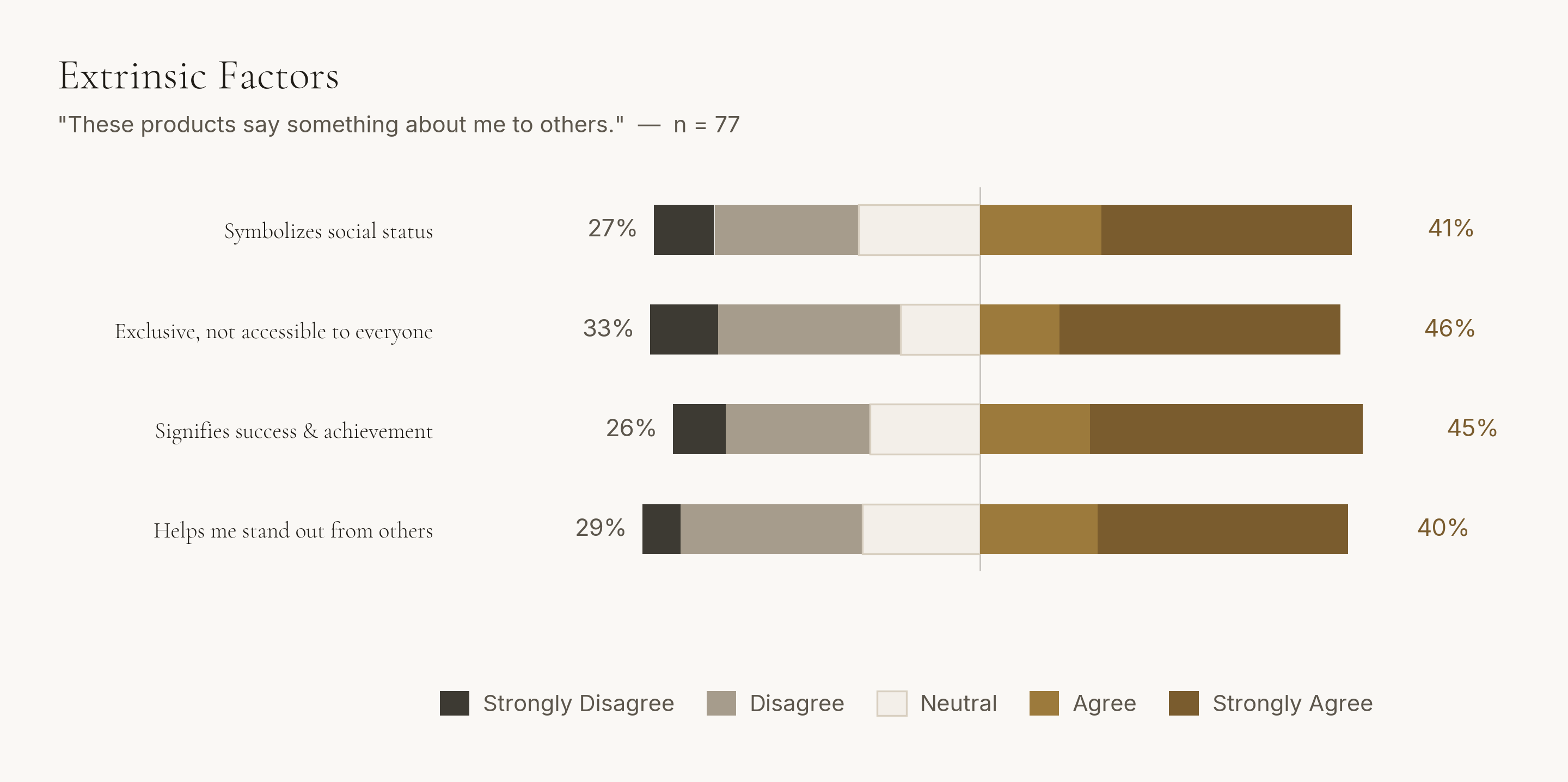
Status still matters — just less decisively than assumed. Responses split almost evenly across agree, neutral, and disagree, meaning extrinsic motivators exist, but they're nowhere near universal.

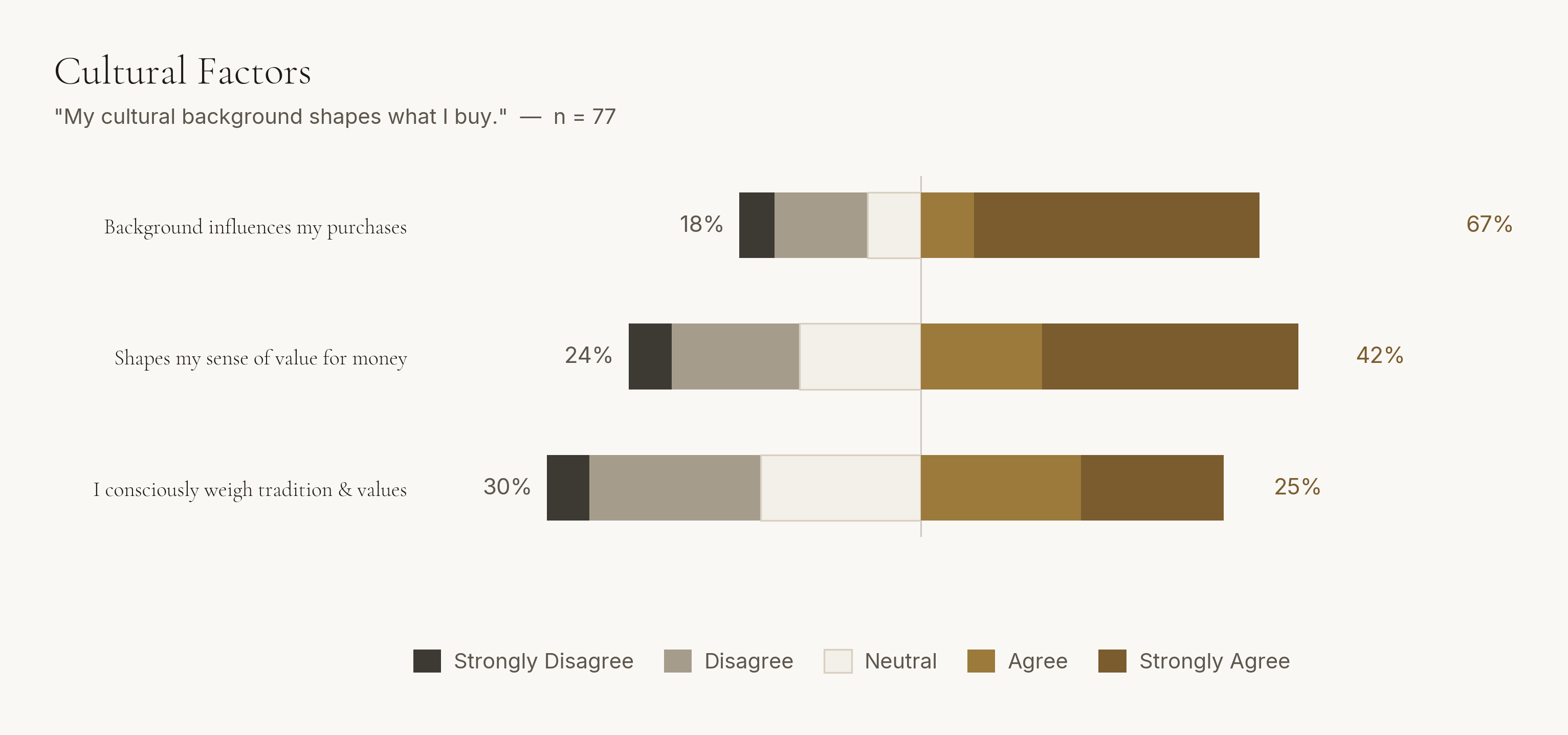
The most surprising result. When asked directly, most people shrugged — a plurality said culture doesn't consciously factor in. But the interviews told a different story.
Two things stood out once I looked past the topline numbers.
People don't know their own reasons, or won't say them. When asked directly whether their cultural background influences their purchases, 67% agreed — the highest agreement score in the entire study. But ask about the specific mechanisms — tradition, values, perceived worth — and responses turn neutral and mixed. People affirm culture's influence in the abstract but can't quite explain how. The same gap showed up between survey and interview responses on status: most survey respondents downplayed how much financial success motivated them, but in interviews — where nobody was ticking a box — plenty admitted status played a real role. Surveys measure what people are willing to admit. Interviews get closer to what's actually true.
Gender is a real, measurable split. Women leaned meaningfully more toward intrinsic and cultural motivators than men did; both genders were equally swayed by status and exclusivity. That tracks with existing research (Kacen & Lee, 2002; Mangleburg et al., 2004), but it was still striking to see it show up this clearly in a sample this size.
This wasn't just an academic exercise. It's the same question every premium brand has to answer: are you selling craftsmanship, or are you selling status? My data says most young buyers will tell you it's craftsmanship — but scratch beneath the surface and status is still quietly doing a lot of the work. That gap between what people say and what actually drives them is exactly the kind of thing I want to keep researching. It's part of why my current MSc dissertation looks at AI personalisation and brand trust — same underlying question, different mechanism.
Single university, self-selected sample, and a survey size too small to catch finer differences between groups. I'd want a larger, more diverse sample to make any of this conclusive — but as a first pass into what actually drives a luxury purchase, it did its job.
Atkinsons wants to reach 18–35 year olds. Instagram is the one channel that age group actually lives on. And it's the weakest channel the brand has. I wanted to know exactly why — and what a 180-year-old department store could realistically do about it without a marketing budget to match Selfridges.
Not a guess. A proper audit — the shop floor, the grid, and a direct competitor, side by side.
Two conversations on the shop floor told me what customers actually want. A systematic audit of 118 posts told me what Atkinsons is actually giving them. Benchmarking against Bakers & Larners — a comparable independent — told me whether the gap was about effort or about strategy.
Three numbers tell the whole story.

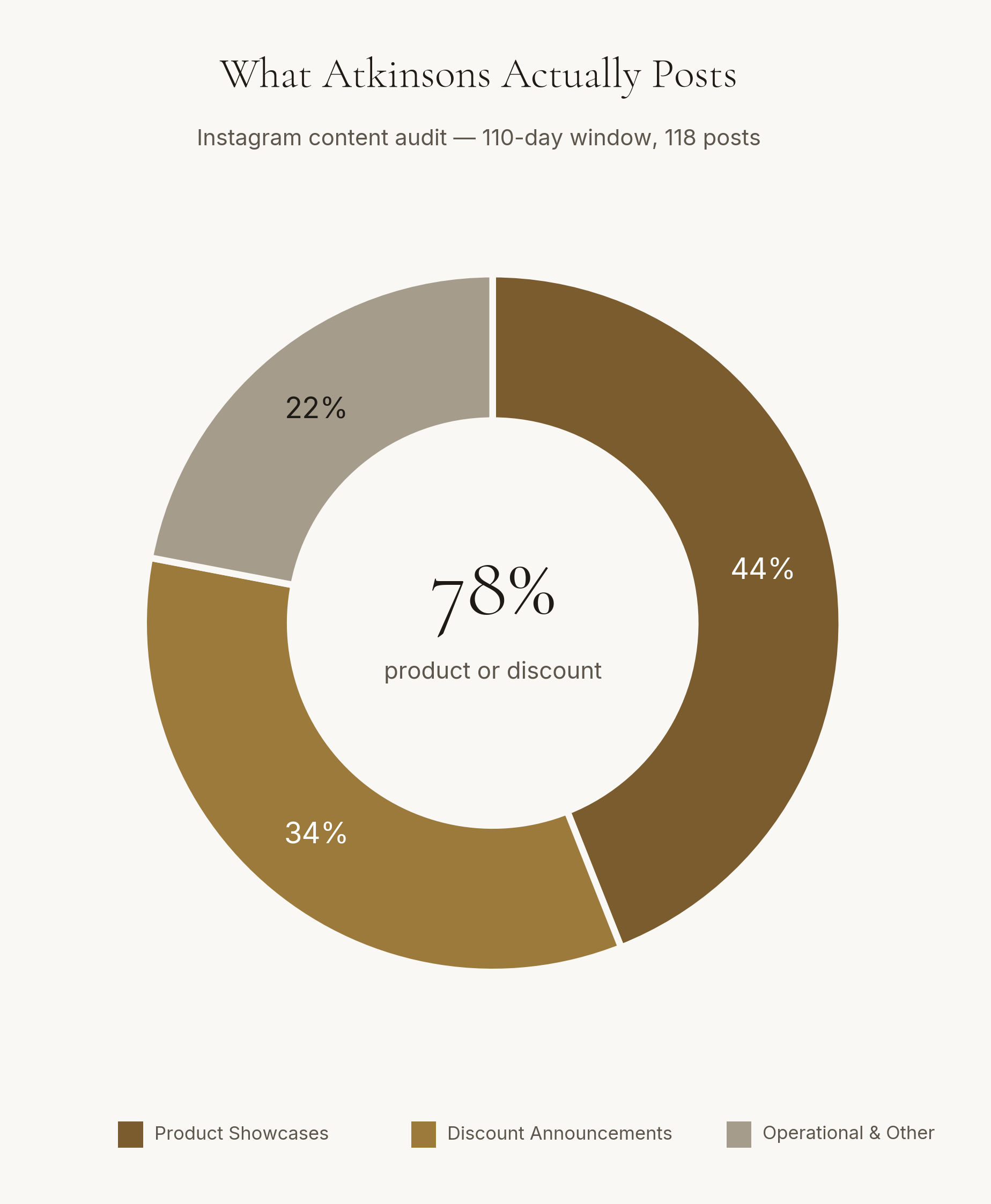
78% of all content is product showcases or discount announcements. Almost nothing else gets posted.

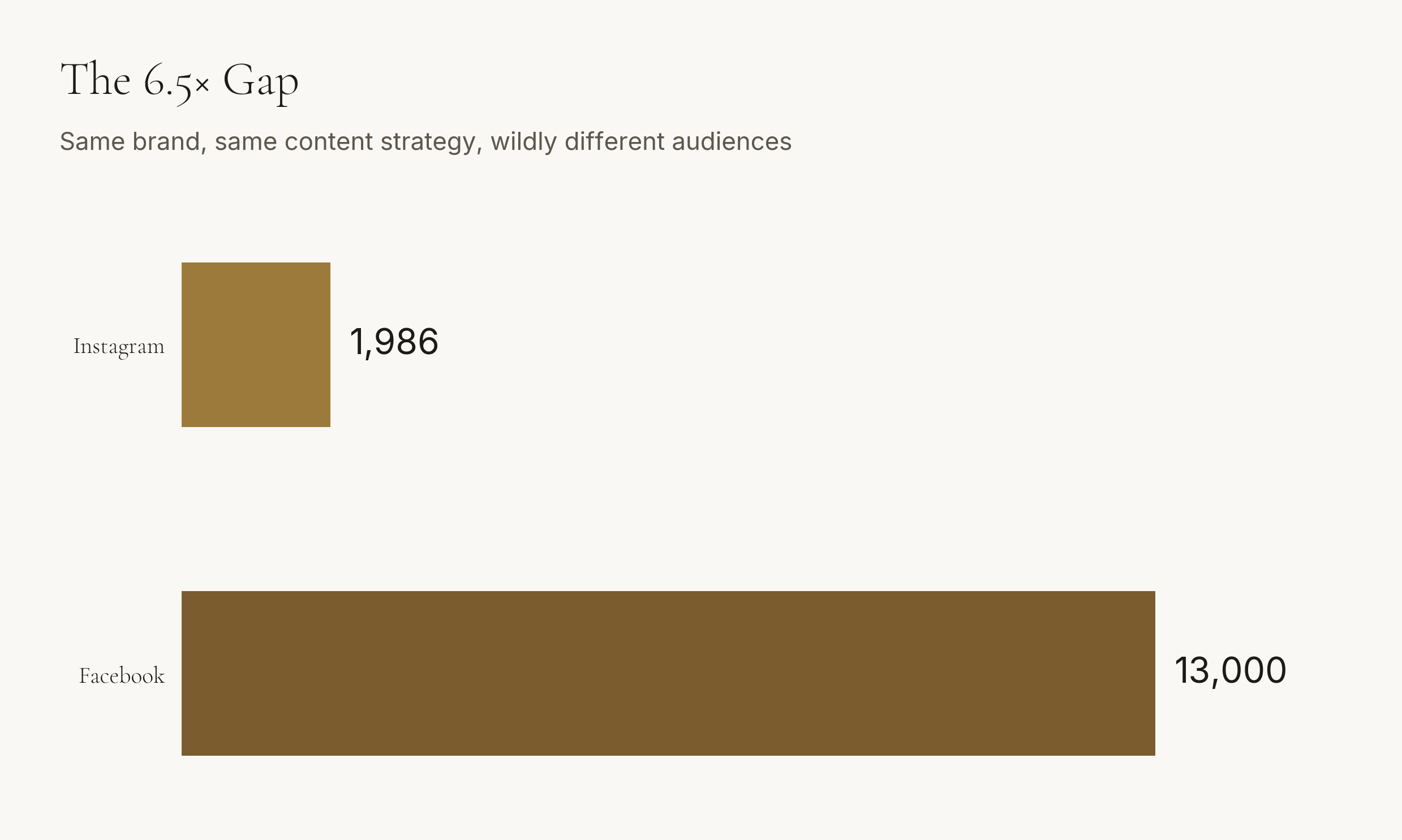
Facebook has 6.5× the following Instagram does — despite receiving the same content, posted at the same time.

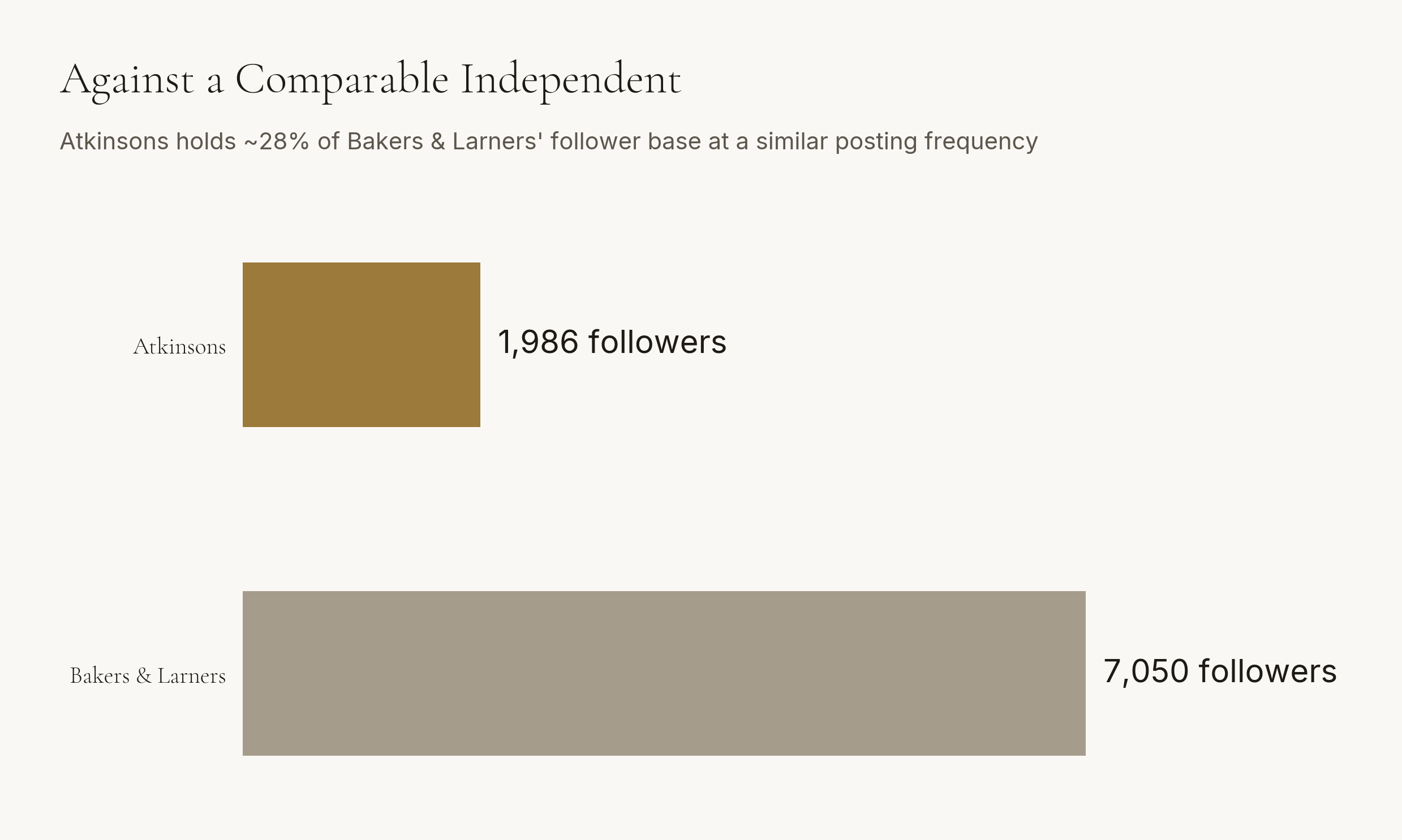
Atkinsons holds roughly 28% of a comparable independent retailer's follower base, at a similar posting frequency. This isn't an effort gap — it's a strategy gap.
The real problem isn't visible until you apply a proper framework to it.
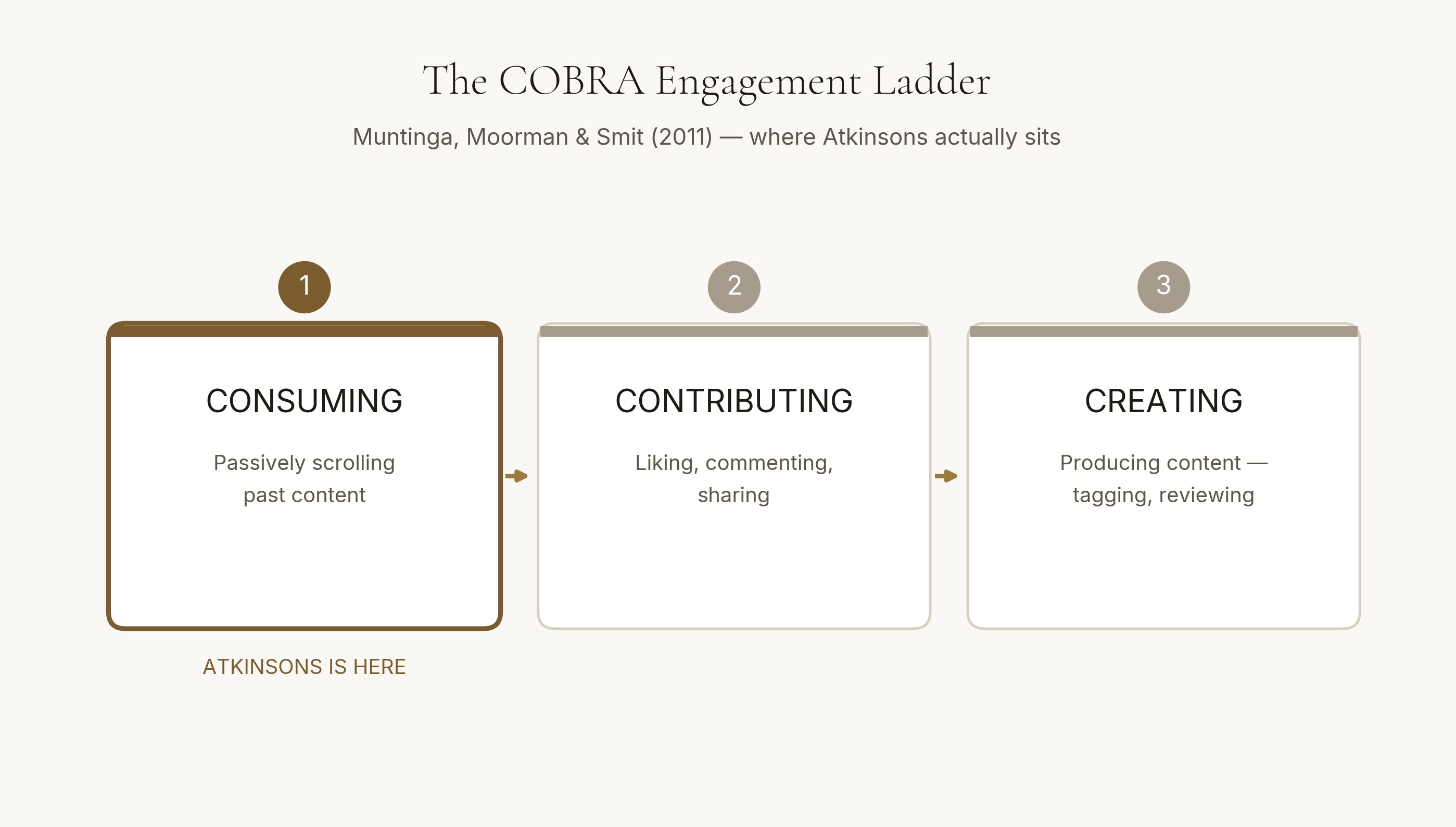
Using Muntinga, Moorman & Smit's COBRA engagement model, Atkinsons' Instagram presence sits entirely at the bottom rung — Consuming. Every post is firm-created, top-down, and built for scrolling past. There is zero user-generated content. Zero tagged customer photos. Zero reason for a follower to do anything but keep scrolling. Schivinski & Dabrowski's research is unambiguous on this point: user-generated content builds brand equity in a way firm-created content structurally cannot. Atkinsons doesn't have a visibility problem. It has a participation problem.

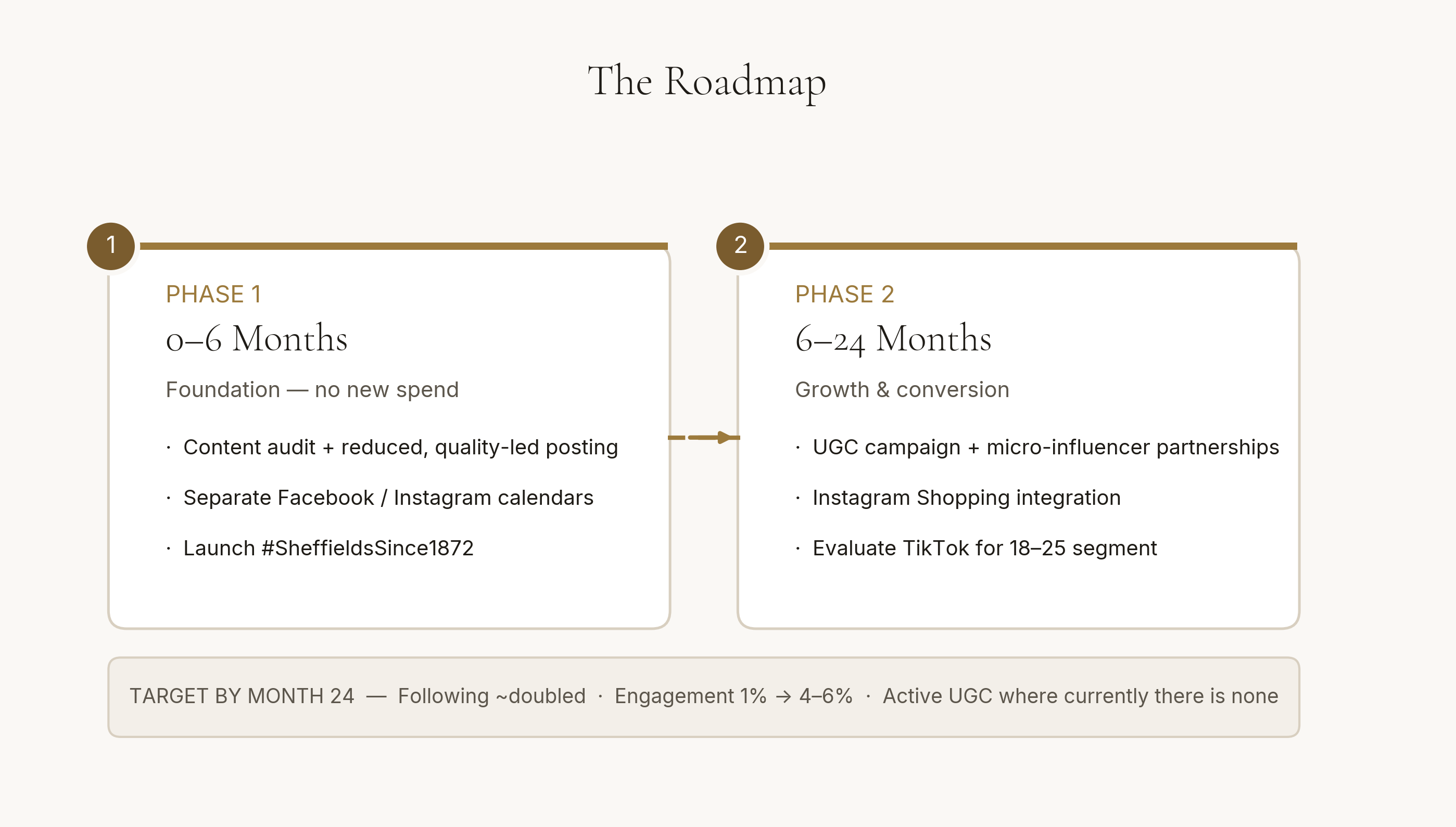
This isn't really about Instagram. It's about whether a 180-year-old independent retailer can build a relationship with a generation that has never once walked past its shop window and thought about it. The answer isn't a bigger budget — it's a phased, deliberately sequenced plan that starts with zero new spend.

Two personally-conducted interviews, part of a broader 11-interview group study — not a large enough sample to generalise from alone. One competitor benchmarked, not a full market analysis. These are recommendations, not yet tested outcomes.


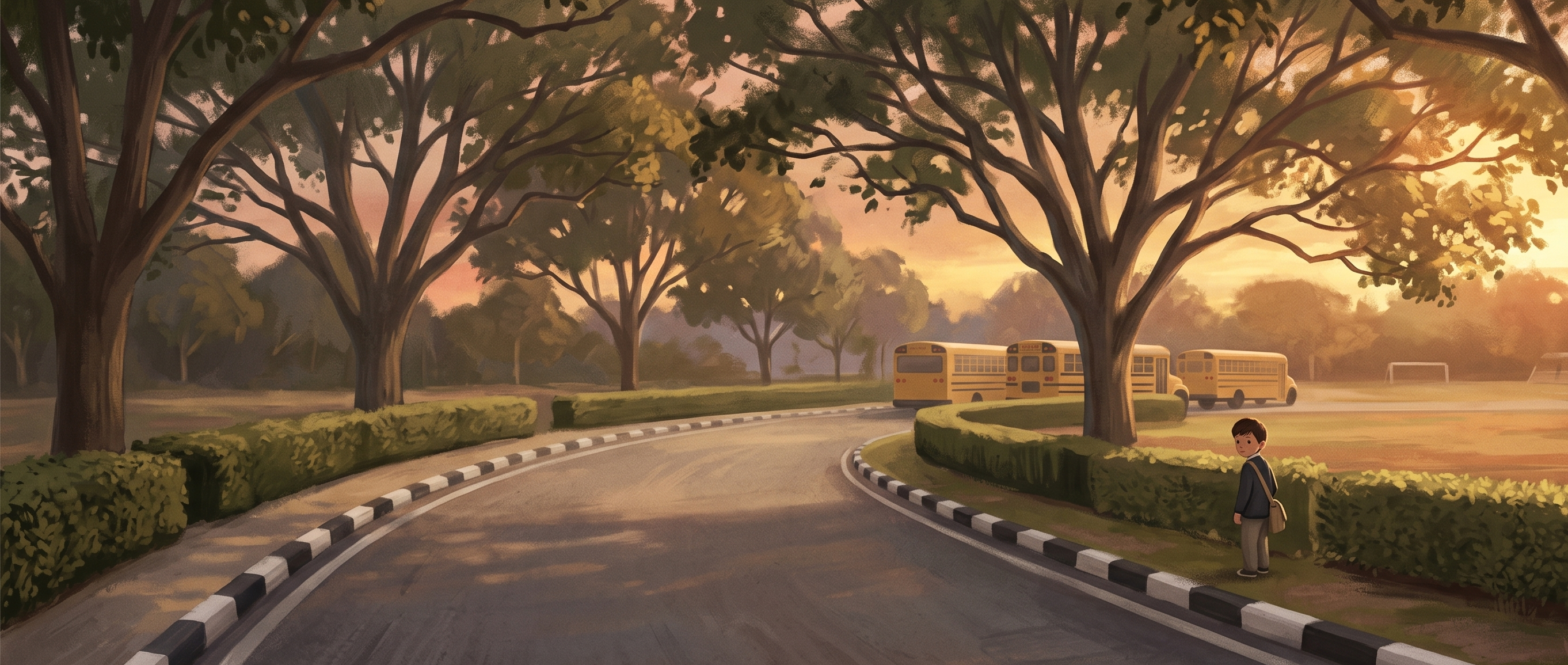
I was eight years old the first time I was sent away to boarding school. I cried more than I'd like to admit, for longer than I'd like to admit. Hyderabad felt impossibly far from Hindupur, even though it wasn't.
But somewhere in those five years, the homesickness turned into something else. I made friends I still think about. I learned how to be on my own without feeling alone. By the end of it, I wasn't the boy who cried anymore — I was someone who could land anywhere and figure it out. That skill turned out to matter more than almost anything else I learned in a classroom.
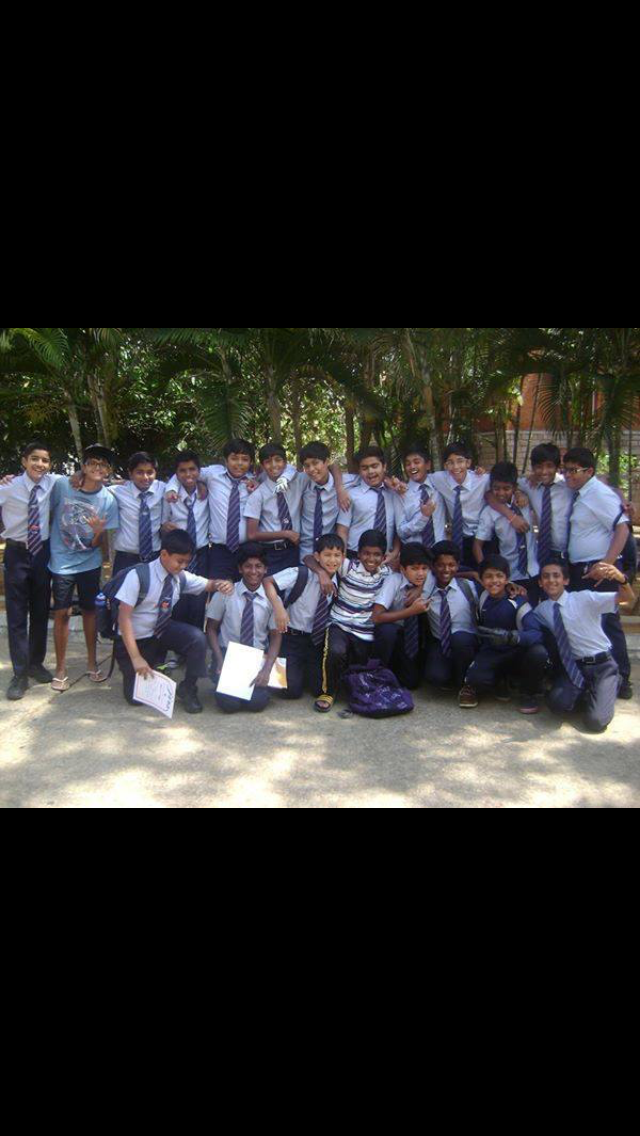
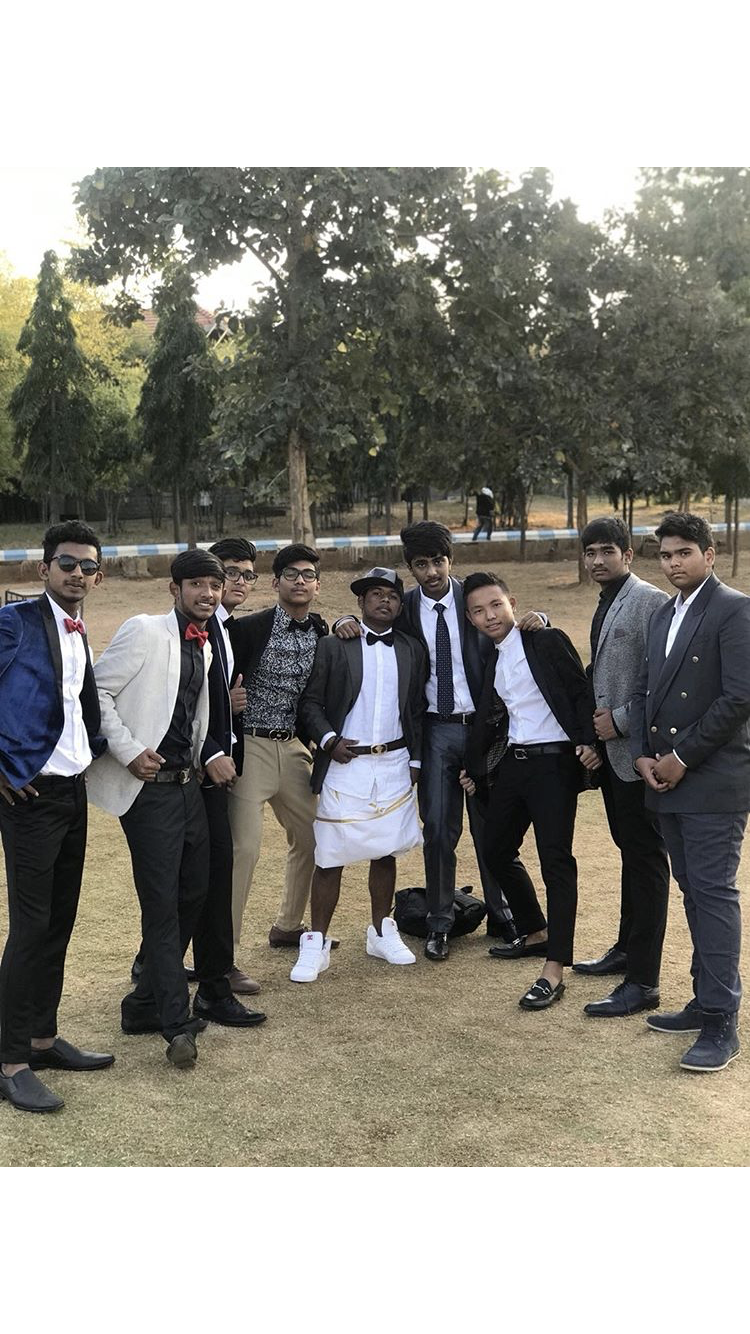
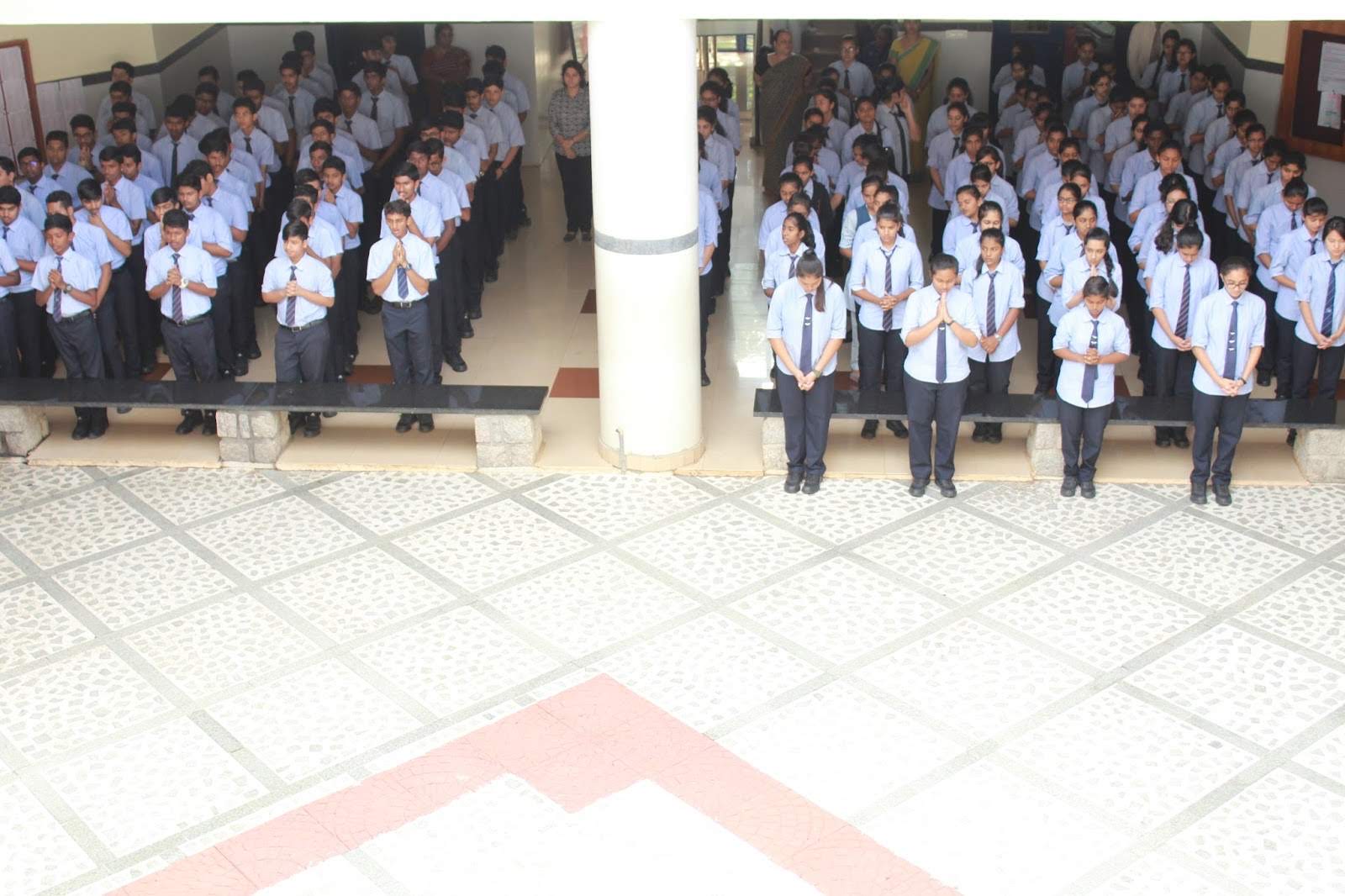
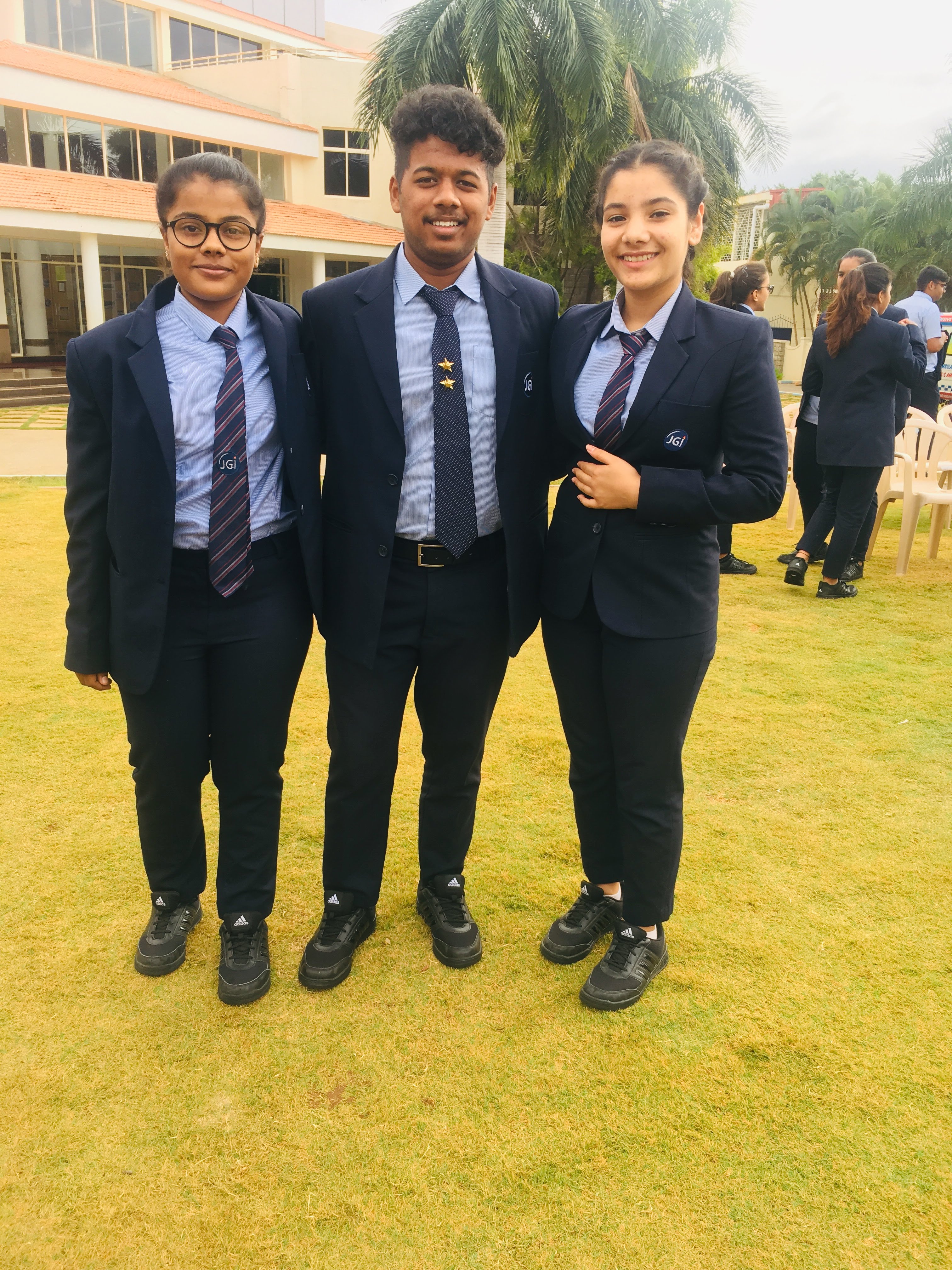
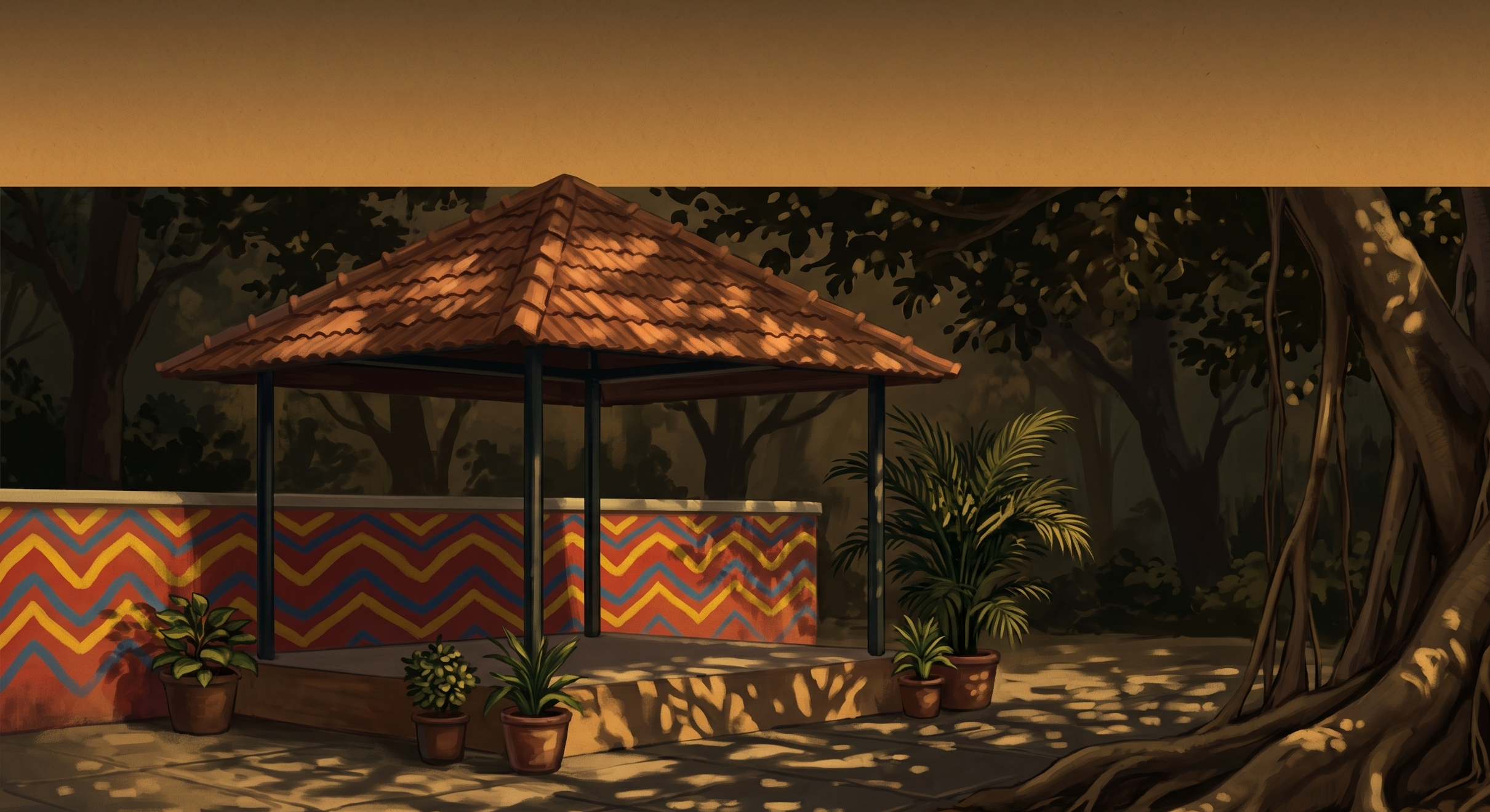
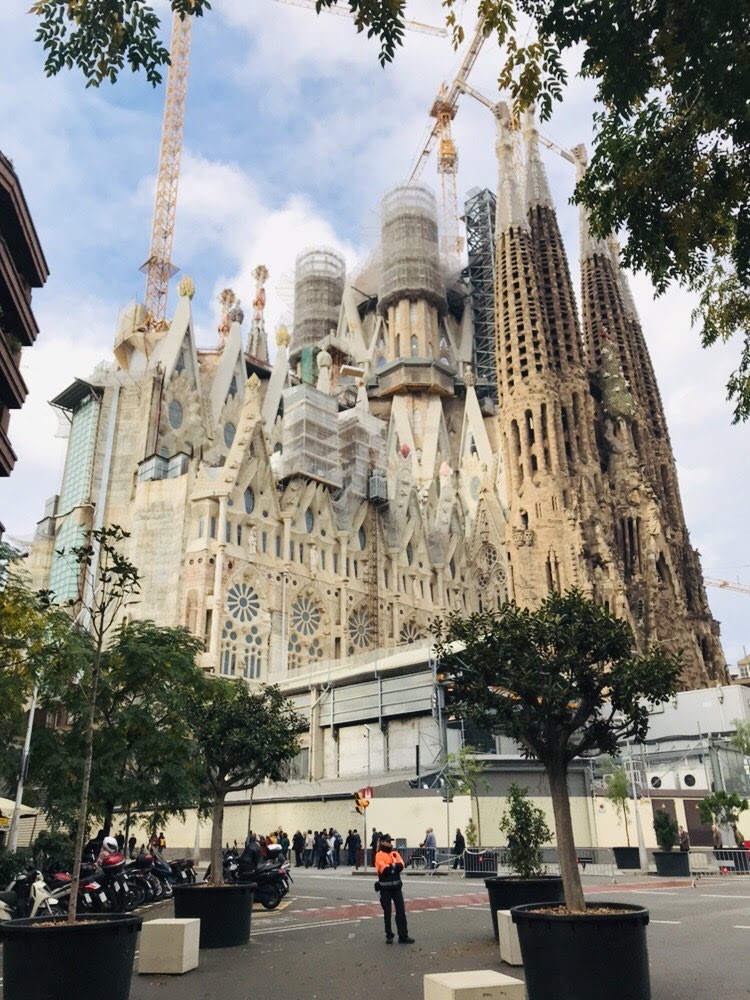
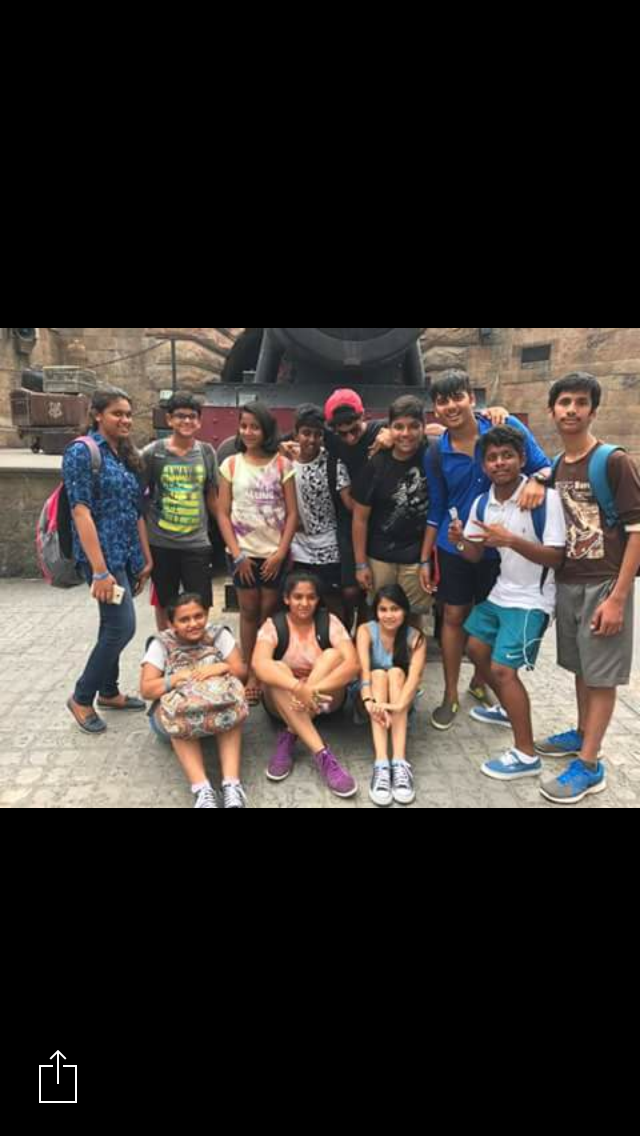
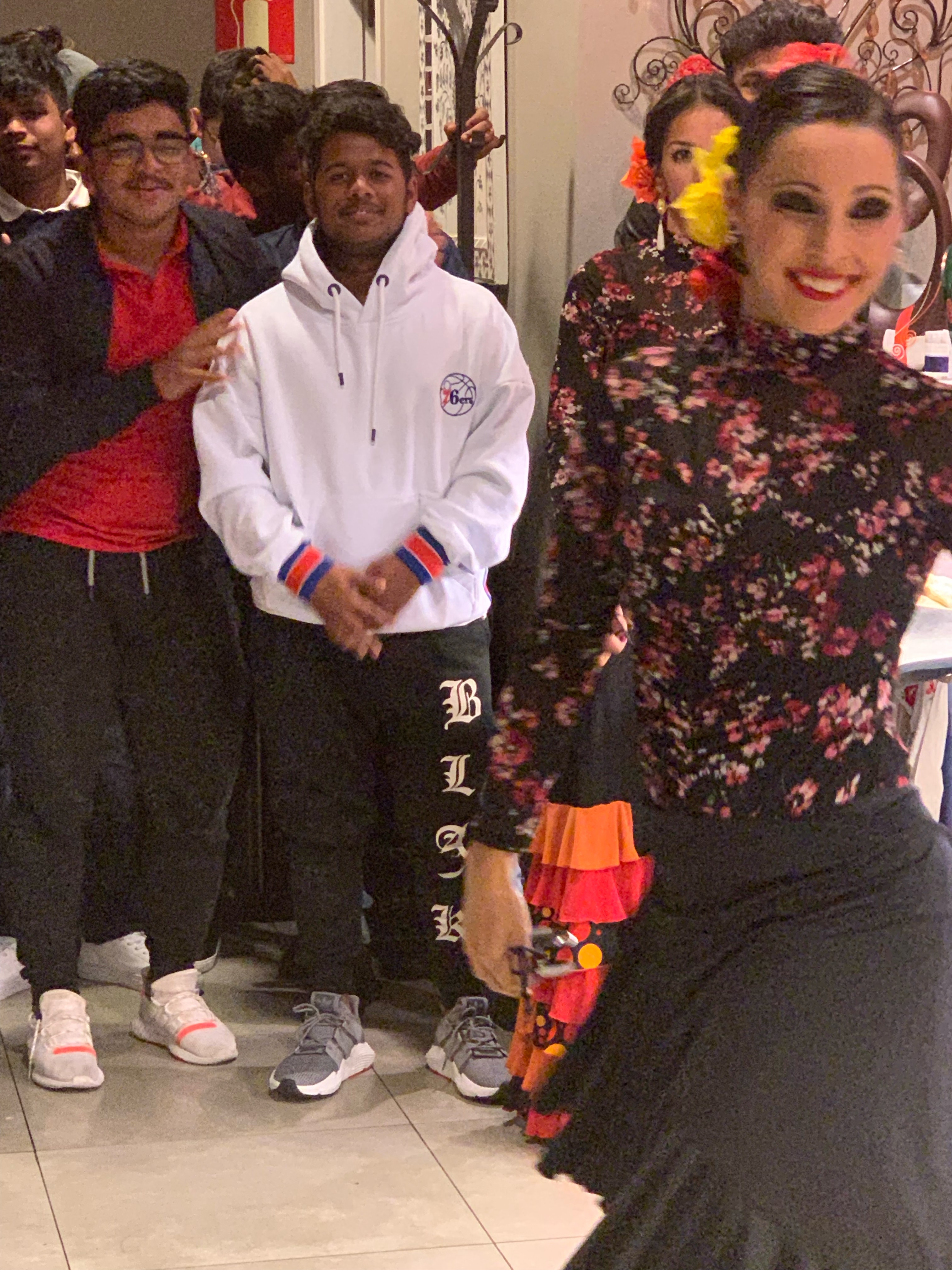
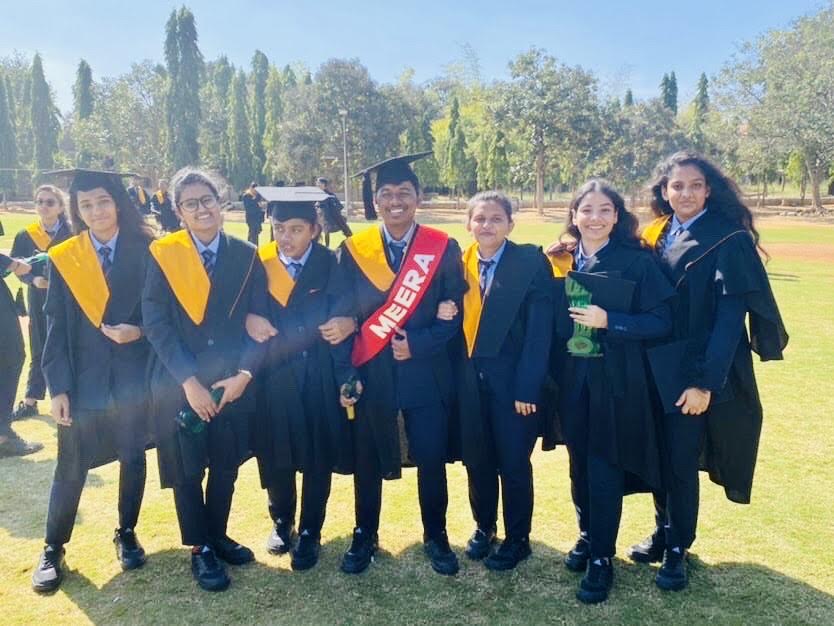
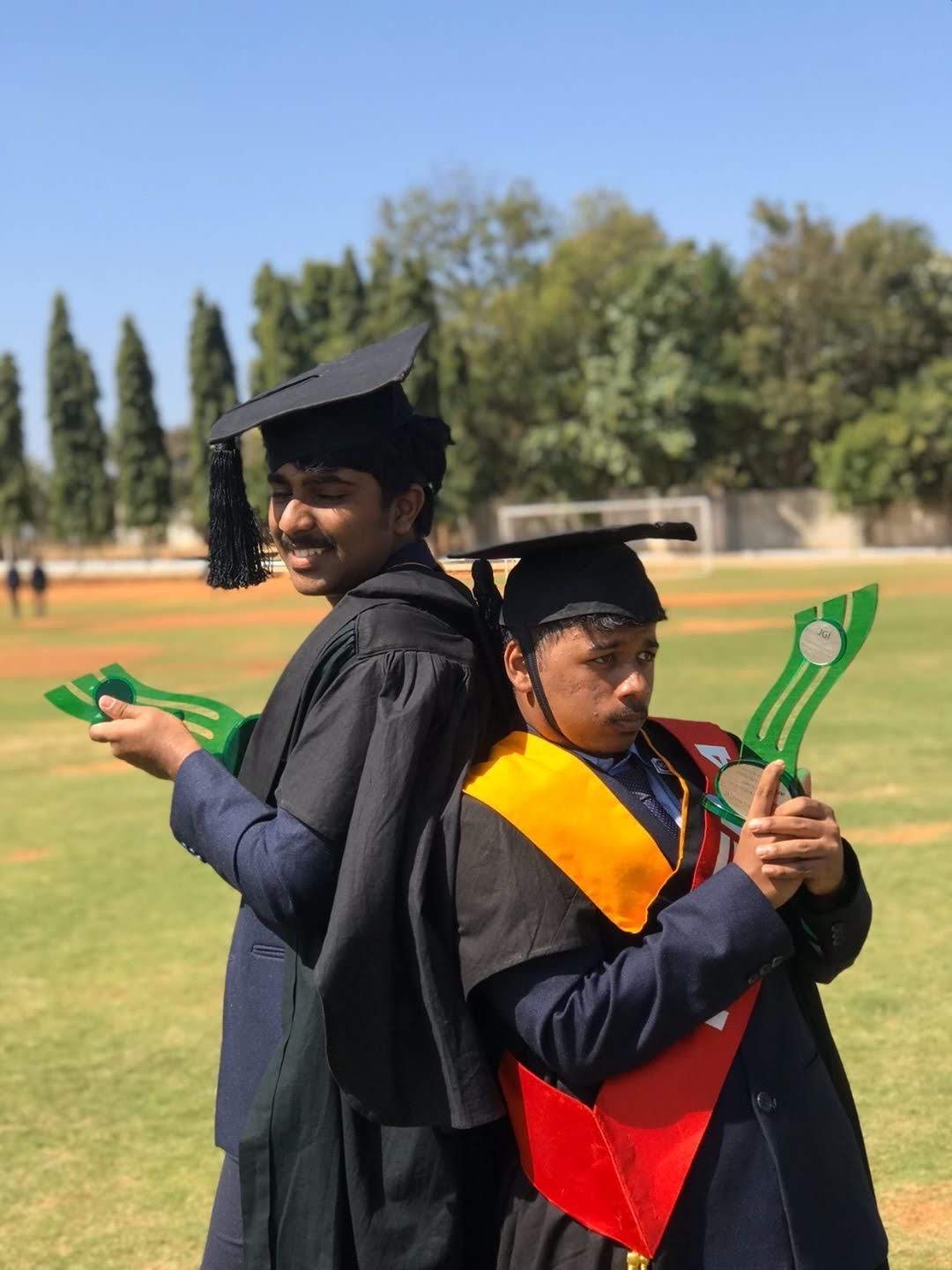
Seven years at Jain International is the longest I've stayed anywhere. It shaped almost everything — elected House Captain of Meera House, Model United Nations, core organiser of Golden Moments and multiple farewell ceremonies, badminton tournaments, school trips to the UK, US, Spain and Portugal.
The version of me that exists today was built in those seven years — the leadership, the discipline, and the friendships that became family.
University was a different kind of education — critical thinking instead of rote learning, and a campus business venture I co-founded with friends.
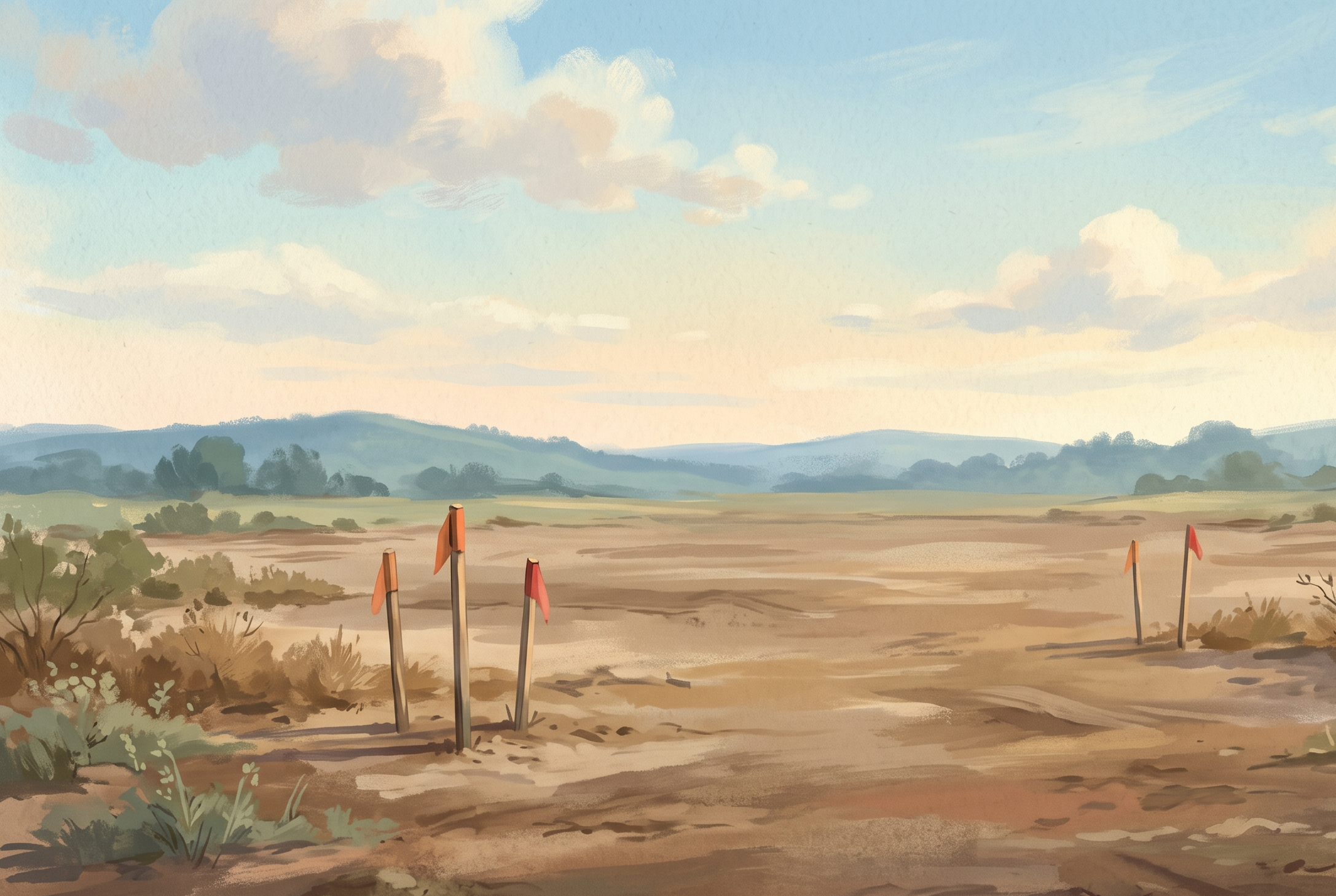
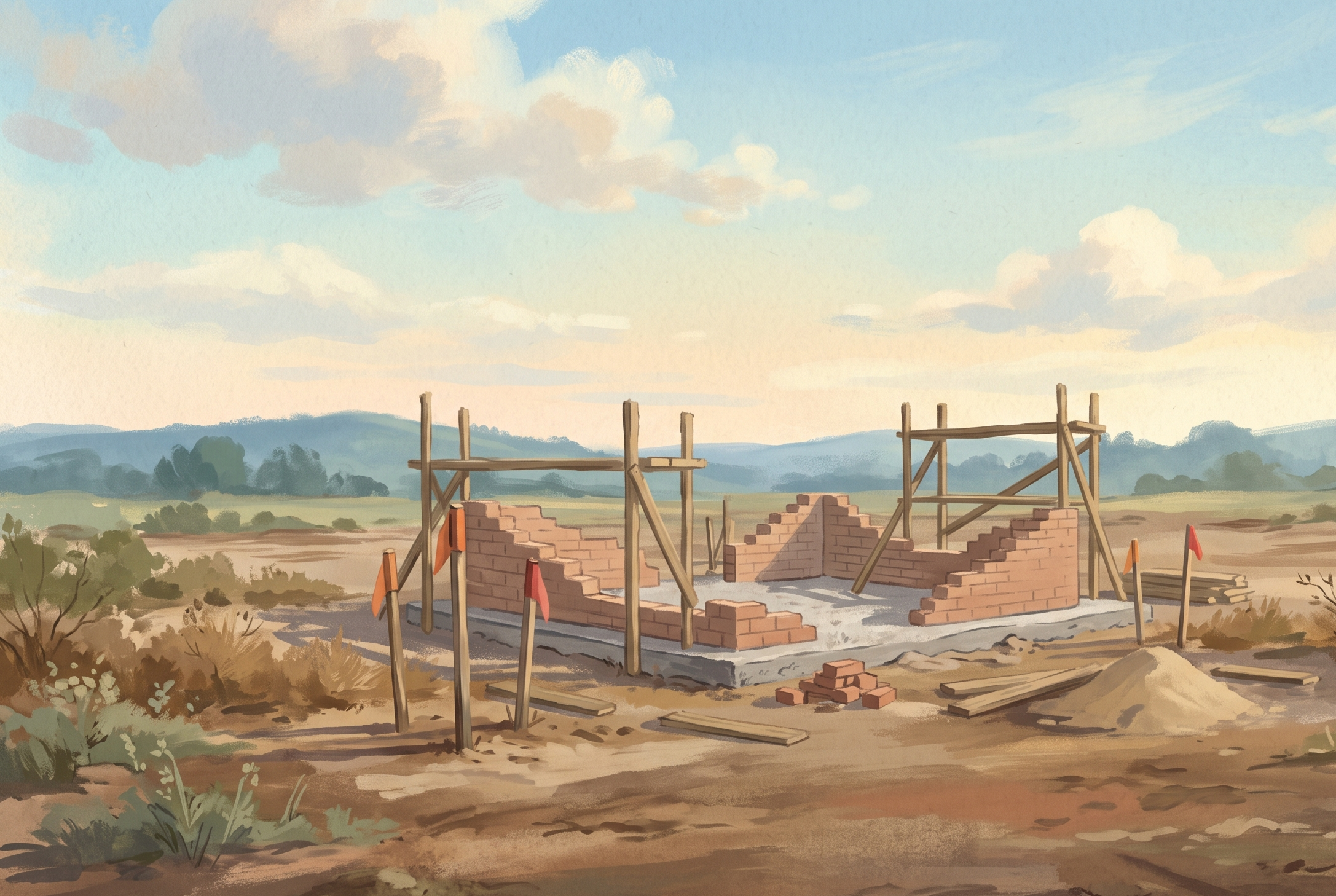
Alongside that came my first jobs in Hyderabad — Mudrantar, then Adsiduous, and the role that actually changed my direction: Assistant Project Manager on the Sri Indi Rakshini renovation project. Coordinating contractors and timelines on a live site taught me more about real-world execution than any lecture. That's where I learned I genuinely love project management.
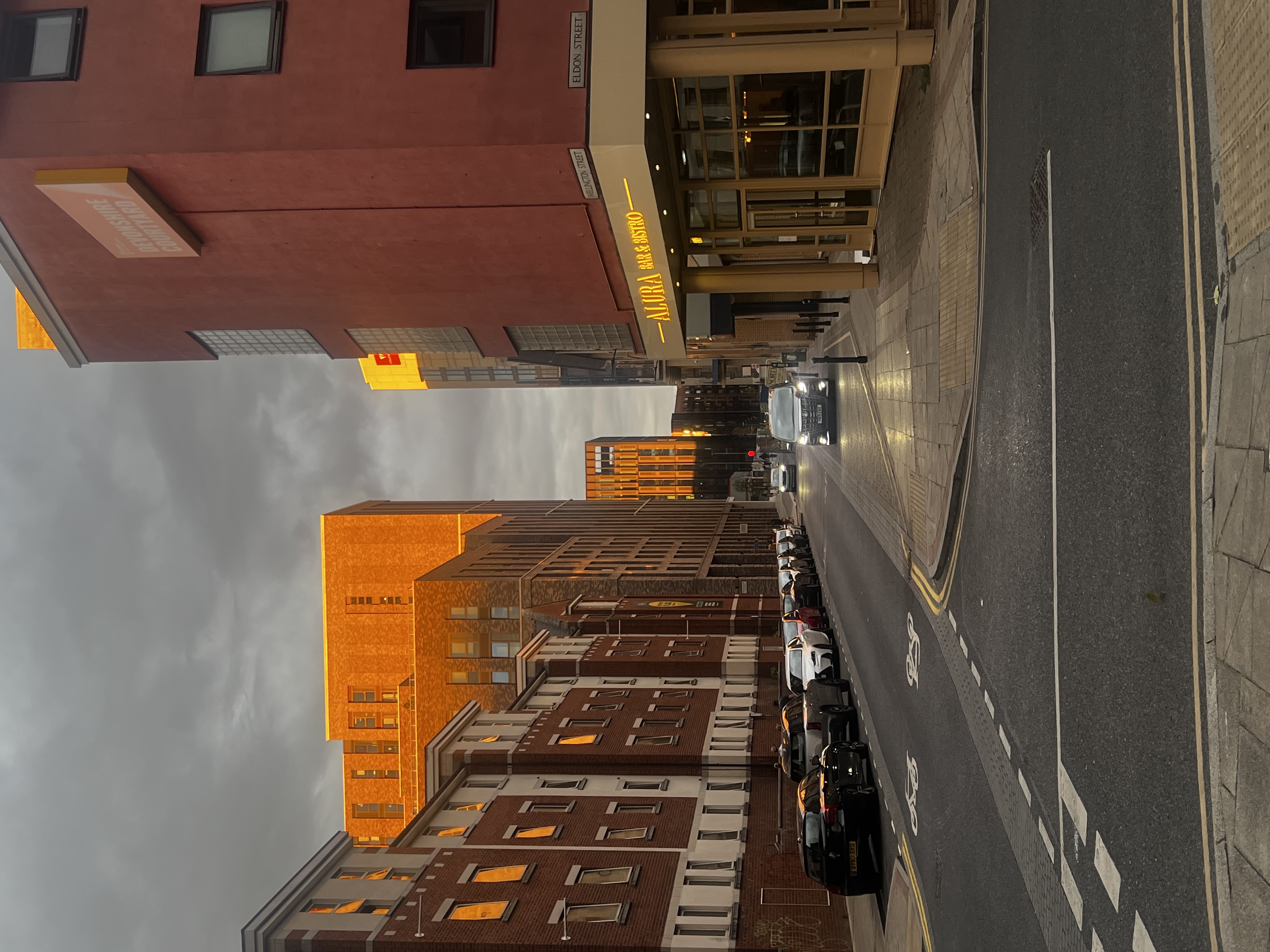
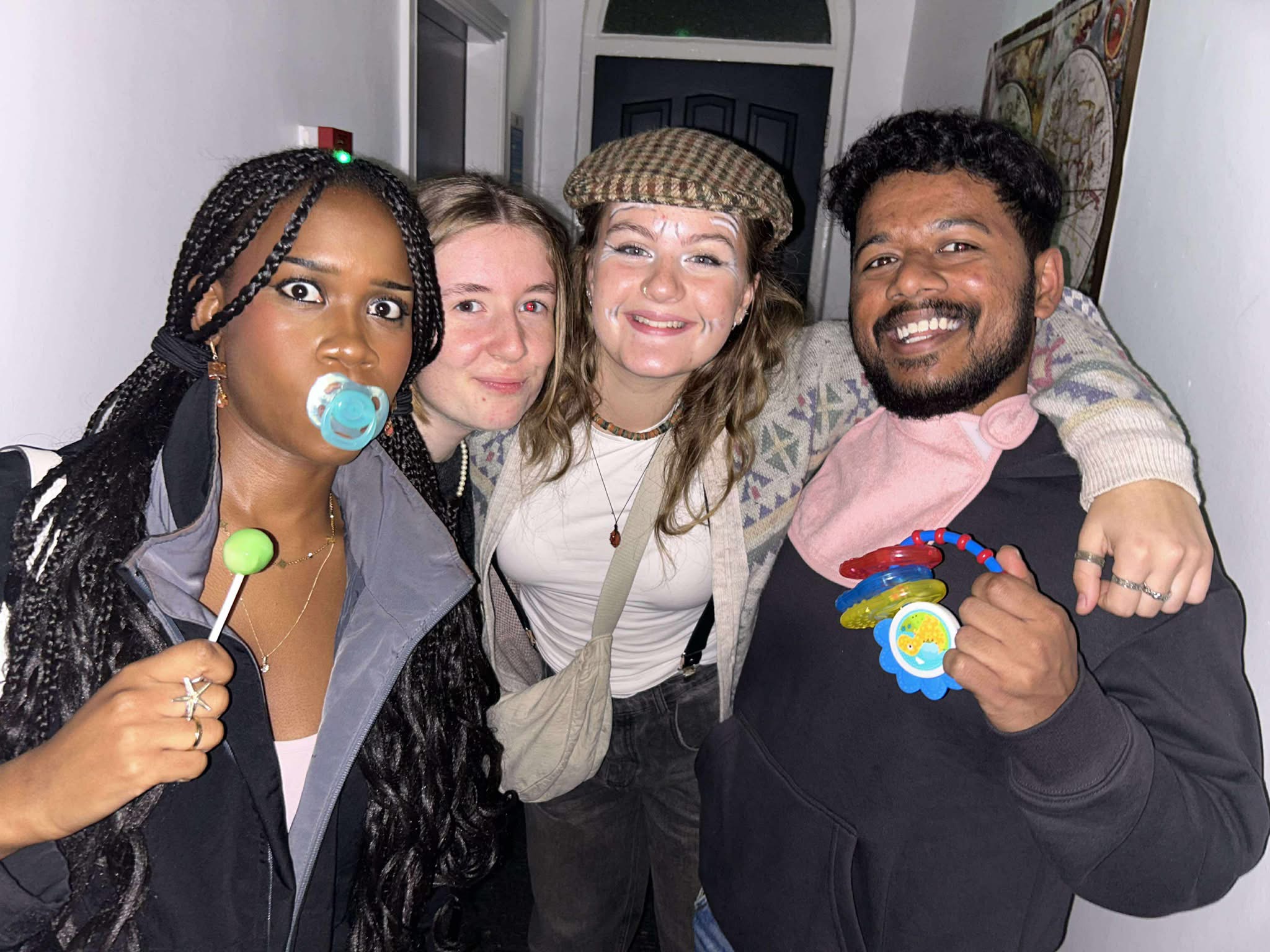
Sheffield is where I am now — MSc Strategic Marketing & Branding, a dissertation on AI personalisation, and a part-time job at the National Trust to keep things grounded. Missing Michael from six thousand miles away has been the hardest part.
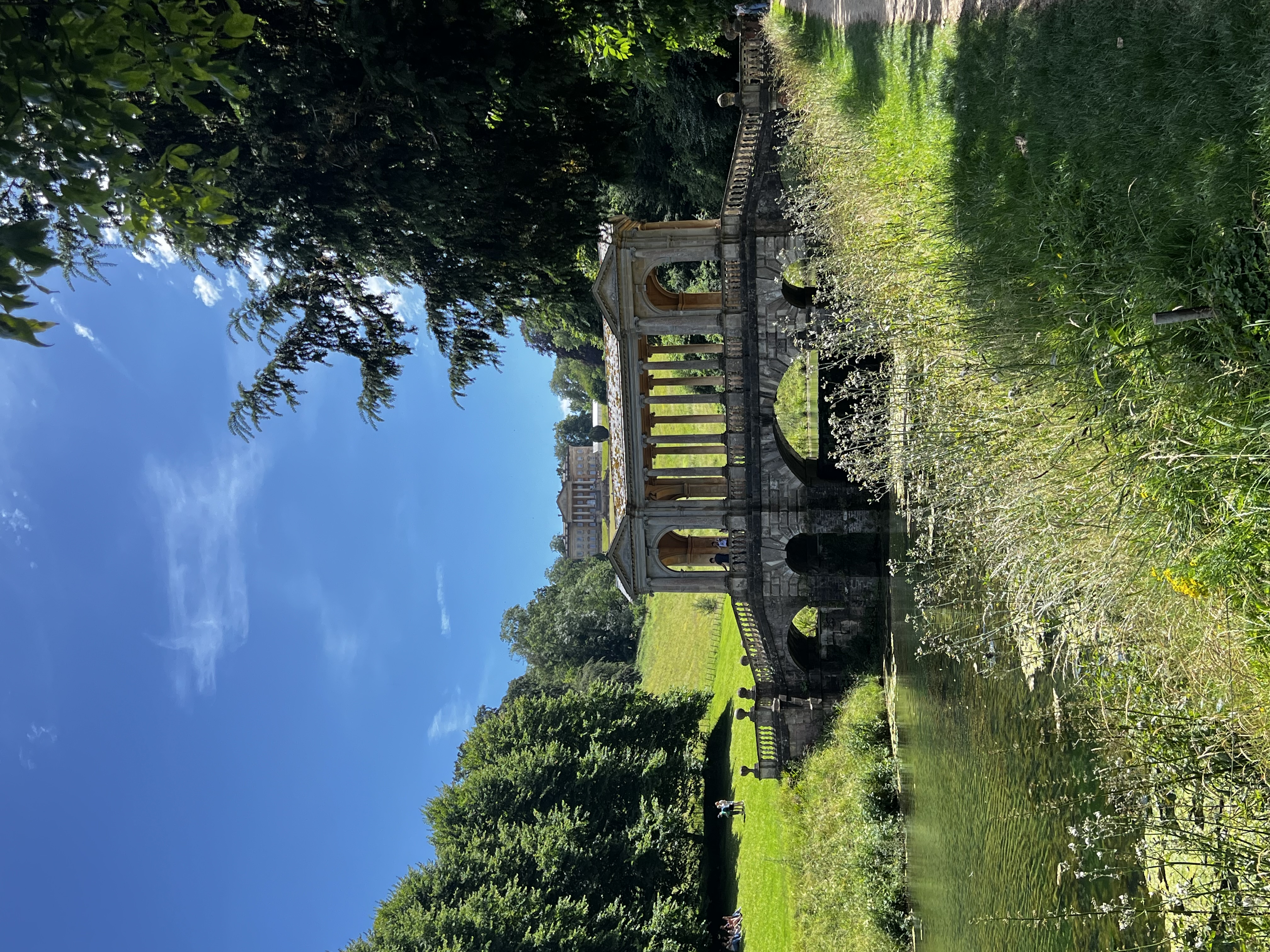
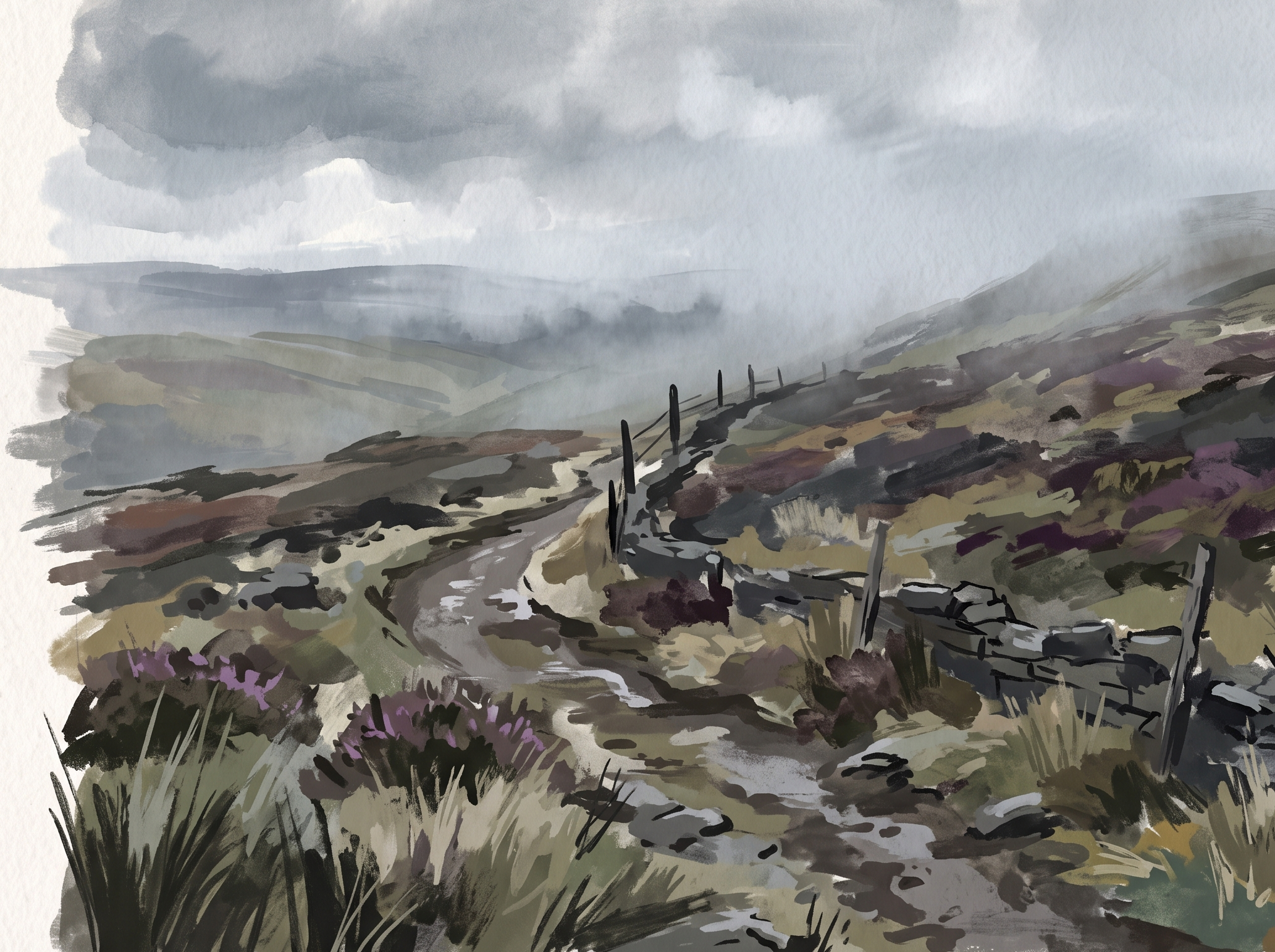
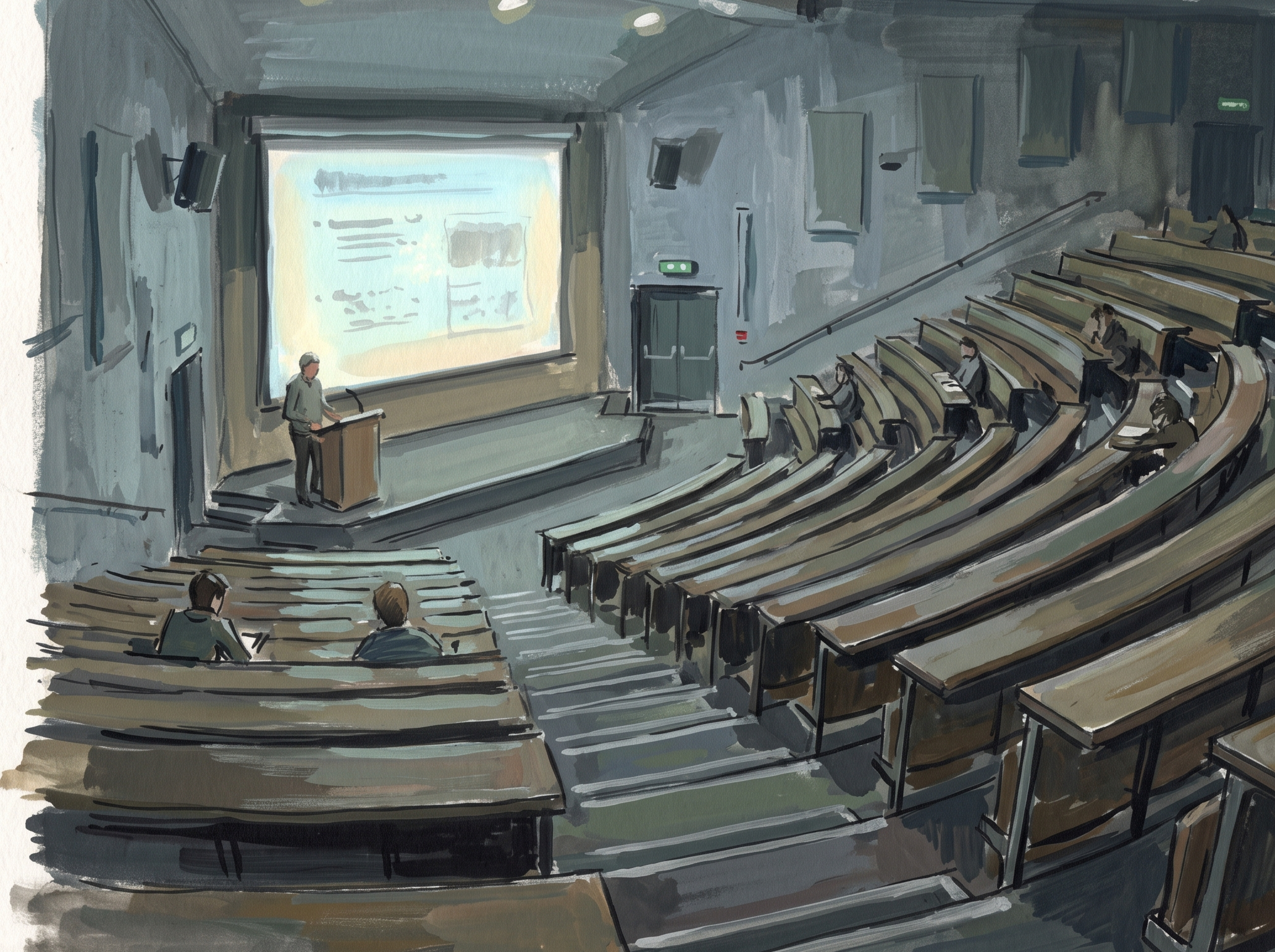
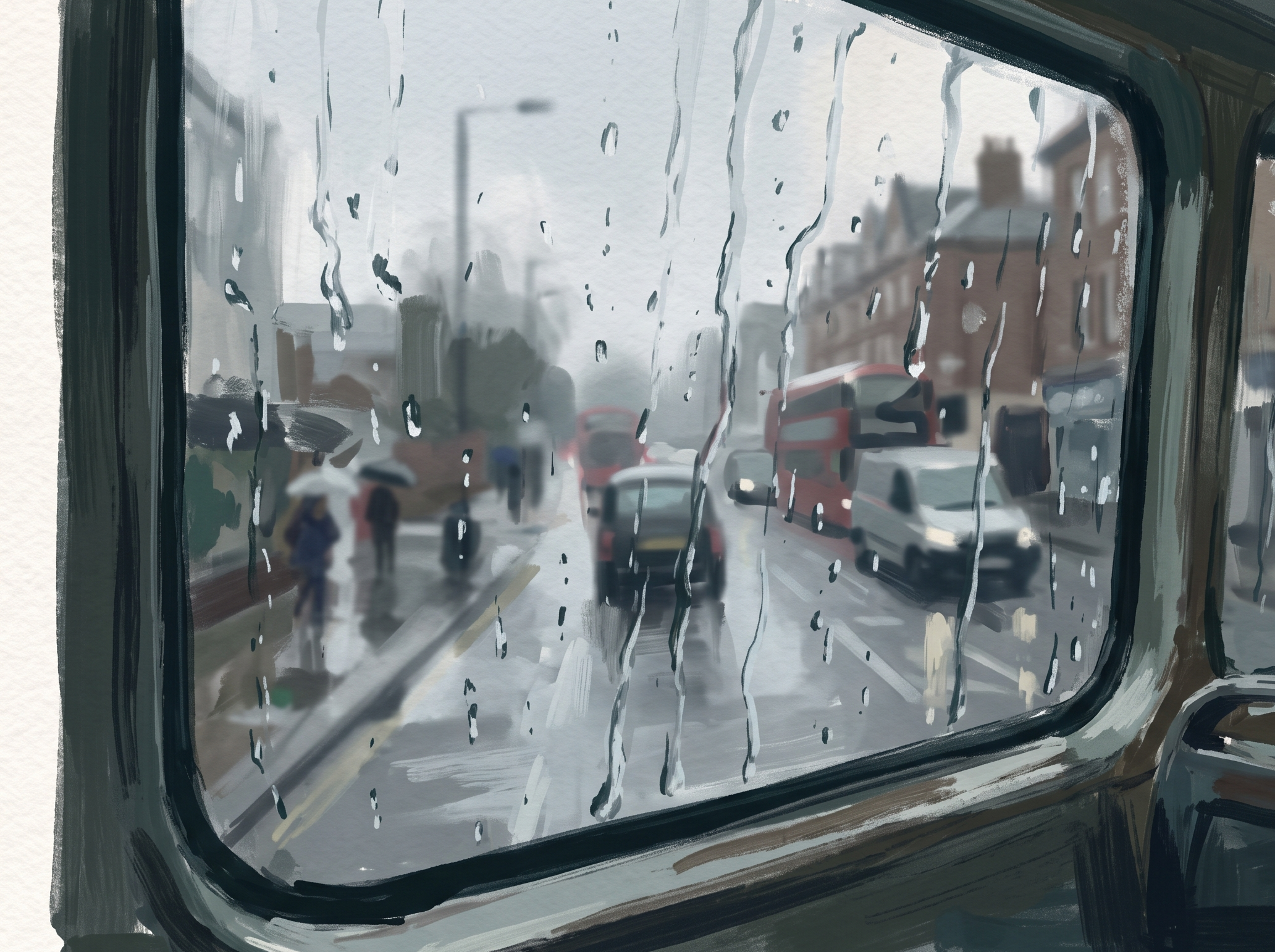
Here's the city, through my eyes:
I cried for a full year. Then I learned kung fu, swam every week, ate Aloo Paratha every morning, and started building the ability to exist anywhere. I wouldn't trade it — but I also wouldn't do it to my kid.
The city is good precisely because it doesn't know it's good. The moment it becomes self-aware about it, something will be lost.
A shop floor is a live case study that never ends. Everyone studying marketing should have to do a semester of it. No exceptions.
The Jindal group. The Hyderabad crew. These aren't social connections — they're the people who'd pick up at 3am and they know I would too.
I try to stay the least accomplished person in the spaces I'm in. Being the most capable is comfortable — and comfort is exactly where growth quietly stops. So I keep looking for rooms full of people better than me, and I don't find that threatening. I find it useful.
Success is easy to measure. Being genuinely present for people is harder. I don't always get it right. But it's the thing I care most about getting better at.
I try to think ten steps ahead. I believe the first years of adult life are for building the foundation, not resting on one.
There's a line from a film I can't place anymore — if you pray for bravery, does God give you bravery, or the opportunity to be brave? Most of what we call character is just that: opportunities we either take or don't.
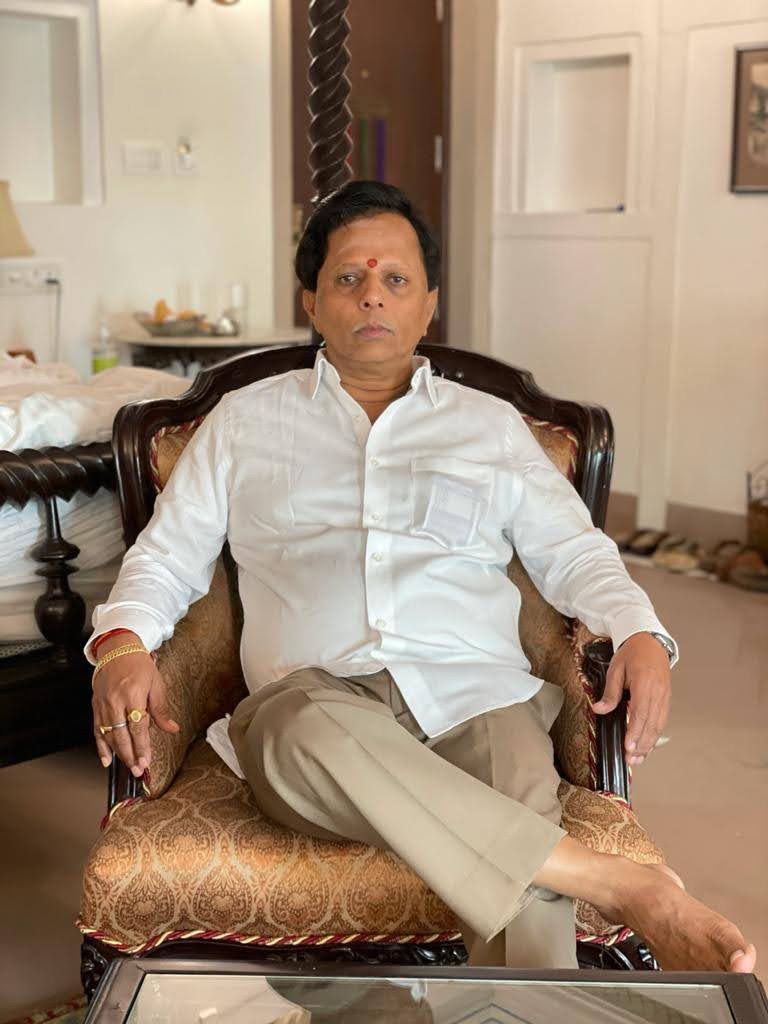
I come from a family that never got anything simply. Every member of it has worked hard, faced real challenges, and kept fighting anyway. That's why I call my father a survivor — not as a figure of speech, but because I've watched him earn that word over and over. He never framed it as resilience. He just kept going. That's the lesson I took from him: not how to succeed, but how to continue.
When I was struggling academically, she moved cities to help me. She just did it. That's the version of love I grew up with — not words, but presence. The people who show up when things are difficult are the ones that actually matter.
I was lucky my parents made the hard decision to send me to boarding school, even though I hated it at first. Looking back, it's what made me who I am — adaptable, independent, comfortable being away from home. Home stopped being a place. It became something I carried with me.

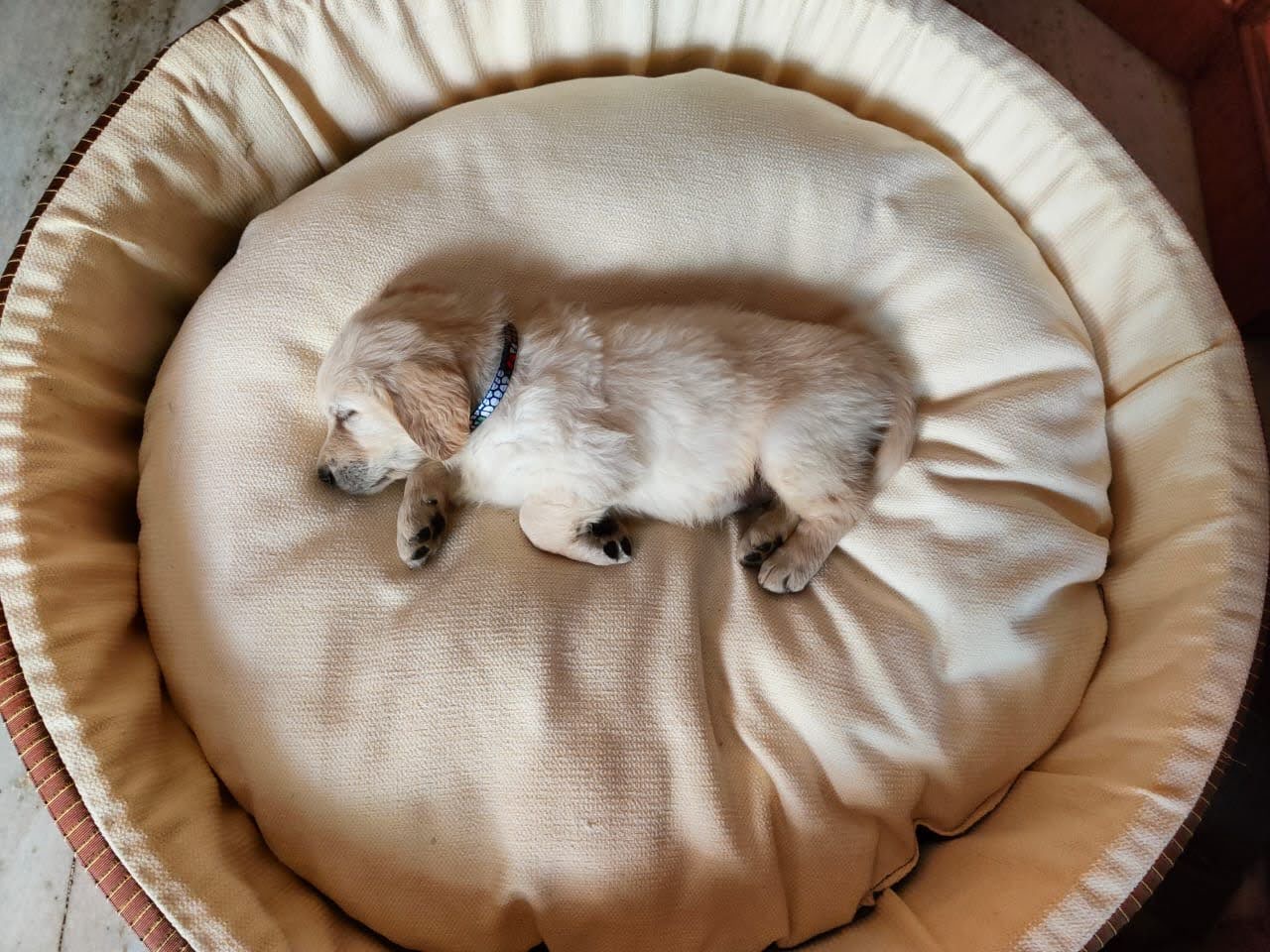
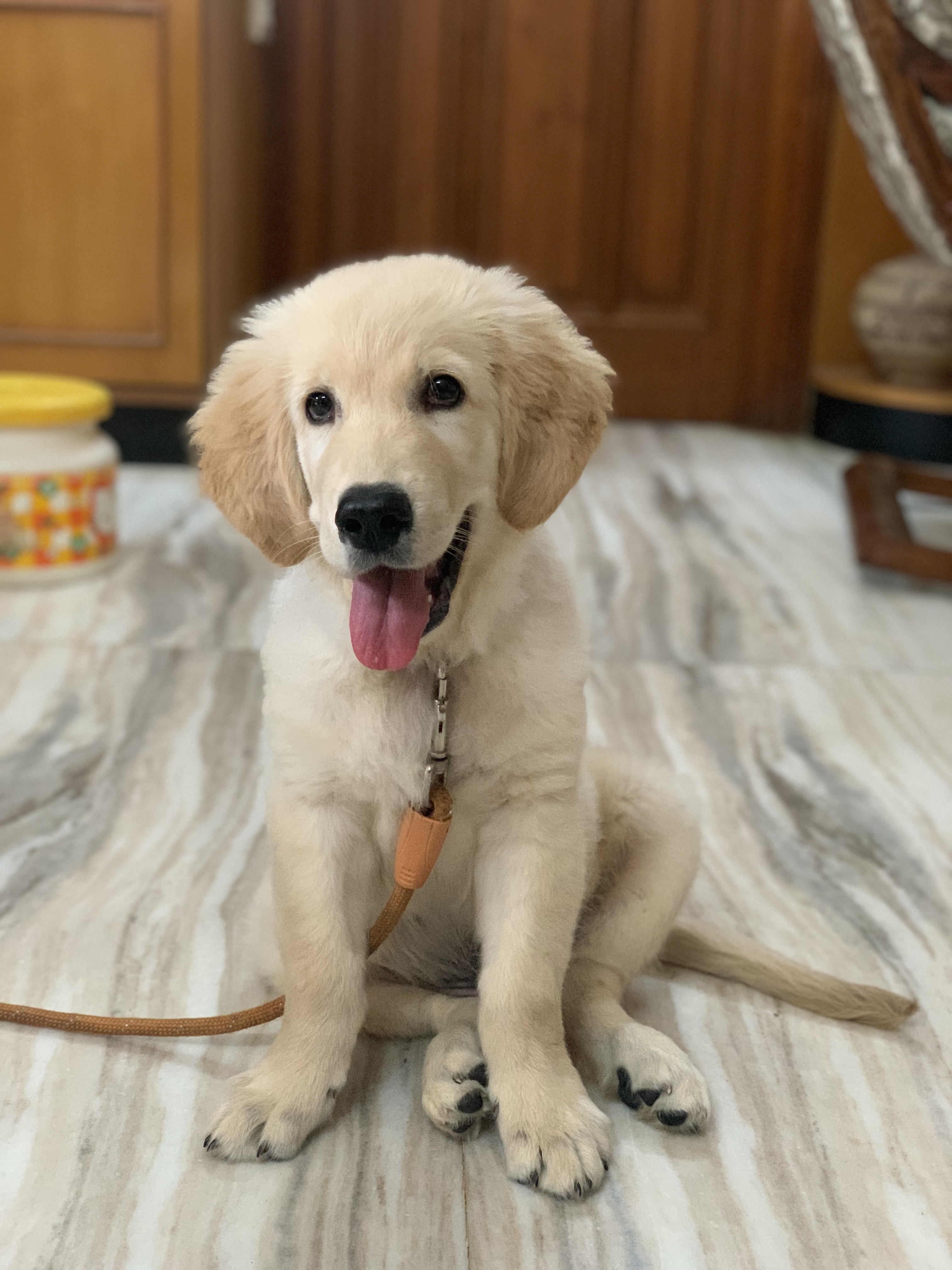
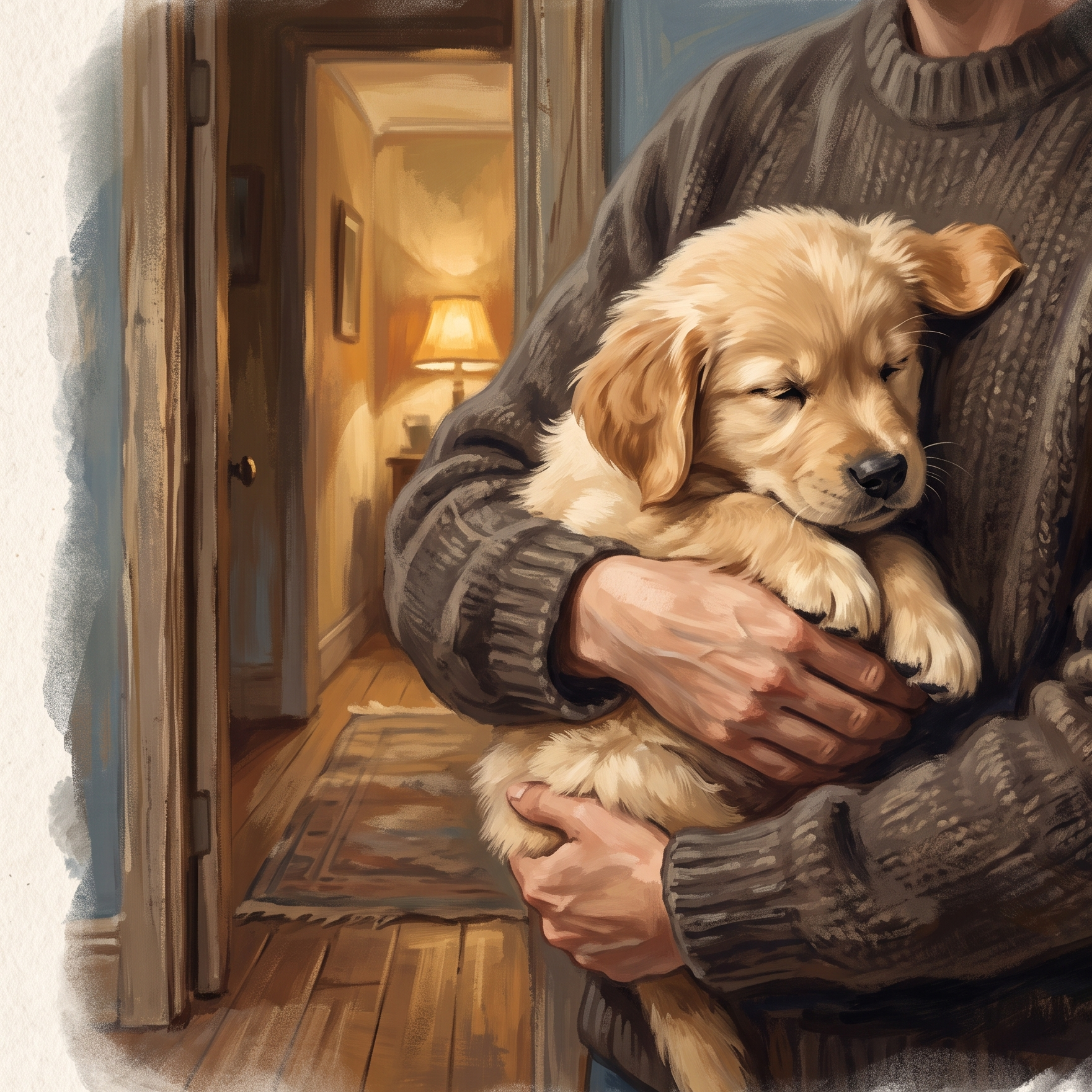
Born Nova. Renamed Michael because nobody could say it right — which, honestly, suits him. He's been through hip dysplasia and skin issues and handled both with more grace than I handle a bad day. Lives with my parents in Hindupur now. Keeps them company. That's the most important job he'll ever have, and he doesn't even know it.
The hardest working person I know. Every city I've lived in, every school I've attended, every flight I've taken — all of it traces back to him making it possible, year after year, without ever making a show of it.
He's the reason I call myself someone who has struggled and come out the other side, rather than someone for whom things came easily. I watched him face real difficulty and keep going regardless. That's not a lesson he ever sat me down to teach — I just absorbed it from watching him live it.
In her own words:
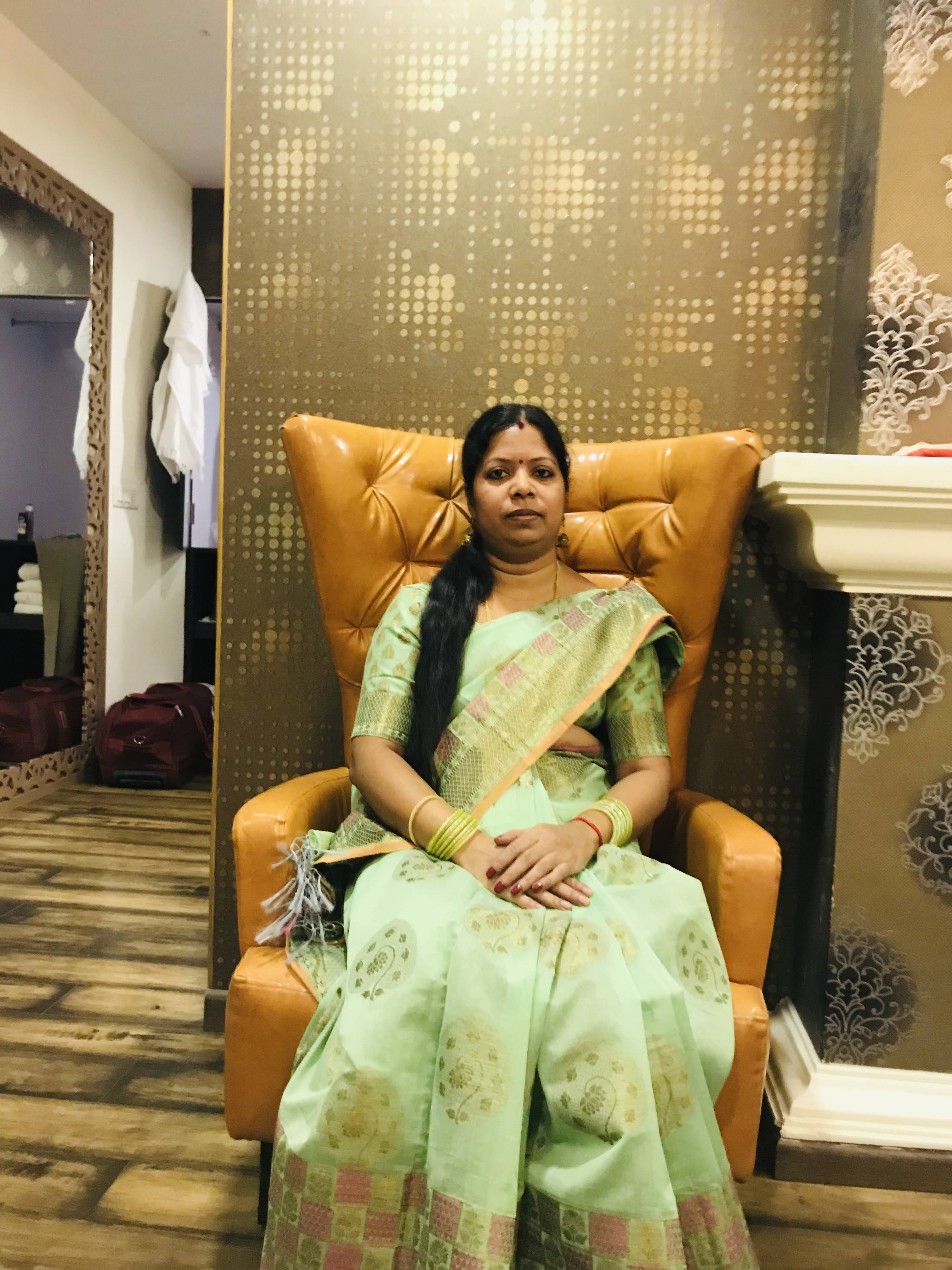
"This is about my son Monish. Everyone in our house used to pamper Chintu. Chintu is no one else, it's the pet name given by his grandmother. The sad thing in Chintu's childhood is that I joined him in a hostel in the fourth class itself. He used to cry a lot. That pain also turned into anger toward me. Like that, his school days and college days passed by in the hostel itself. By staying in the hostel, he learned a lot. That is… kindness, helping, and giving respect to elders. He learned a lot like this. He also learned about money savings. But the minus point he has is… anger, and the stubbornness within that anger. However, that would only be up to a certain extent, and it remains so. Because he is also a good human being. Along with that, he is very reserved. He talks very little."
That's not something I'll ever forget. The most unconditional love I've ever known.
Based in Sheffield — always up for a conversation about marketing, branding, or anything else.
No CV language. No carefully chosen words. Just what actually happened and what I actually think about it.
The version of my opinions that didn't make the professional side. Unedited. No audience considered.
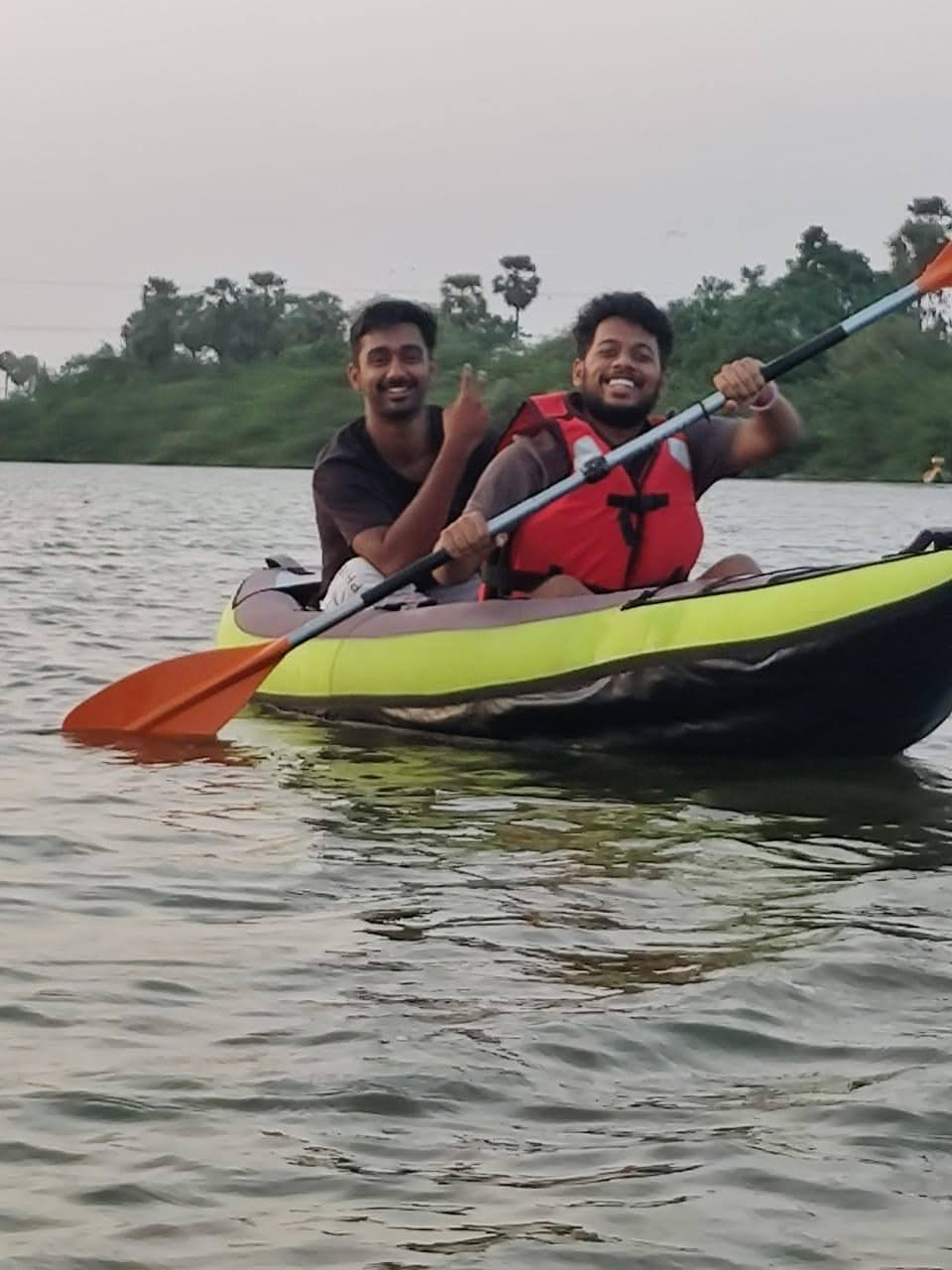
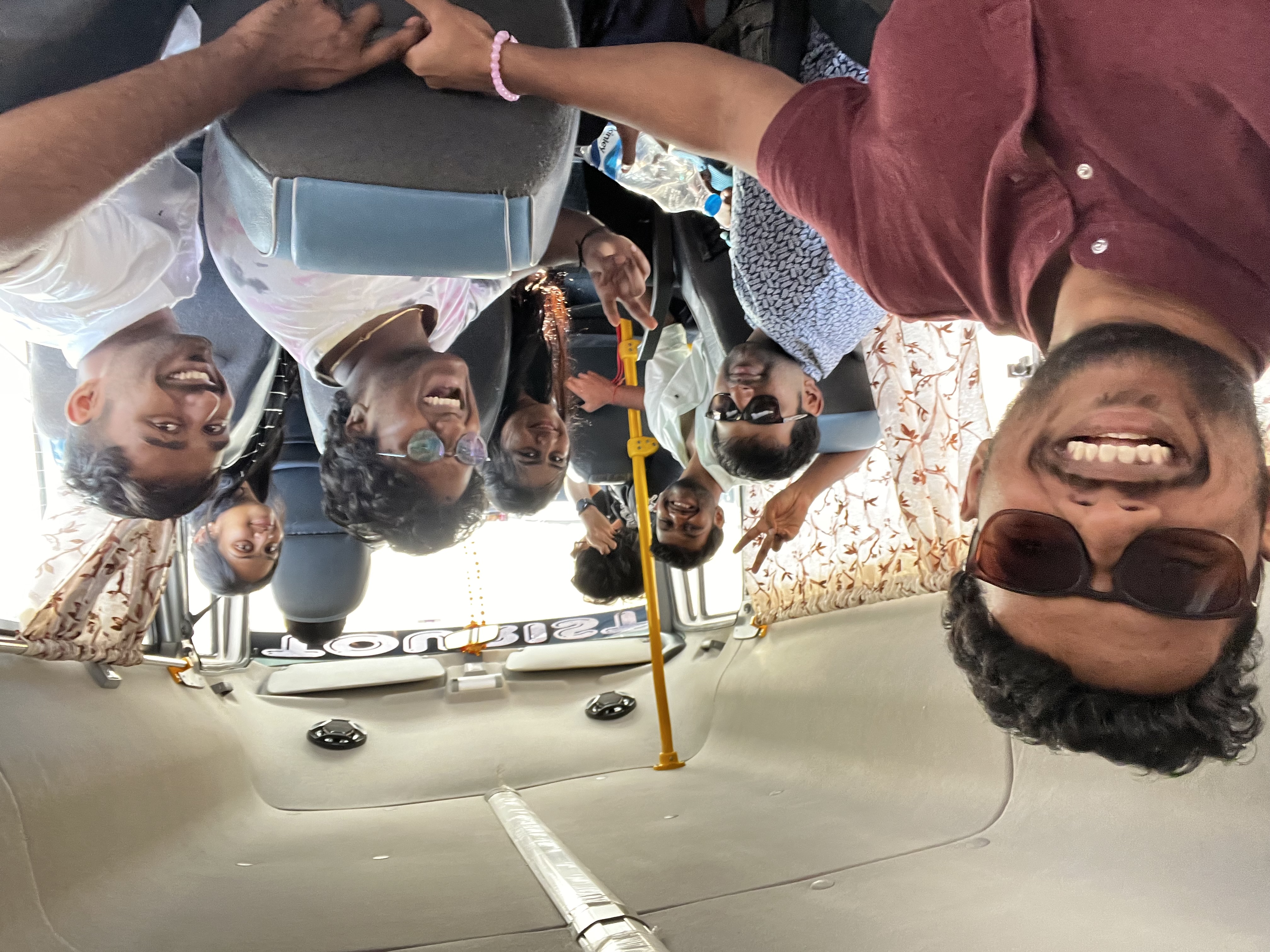
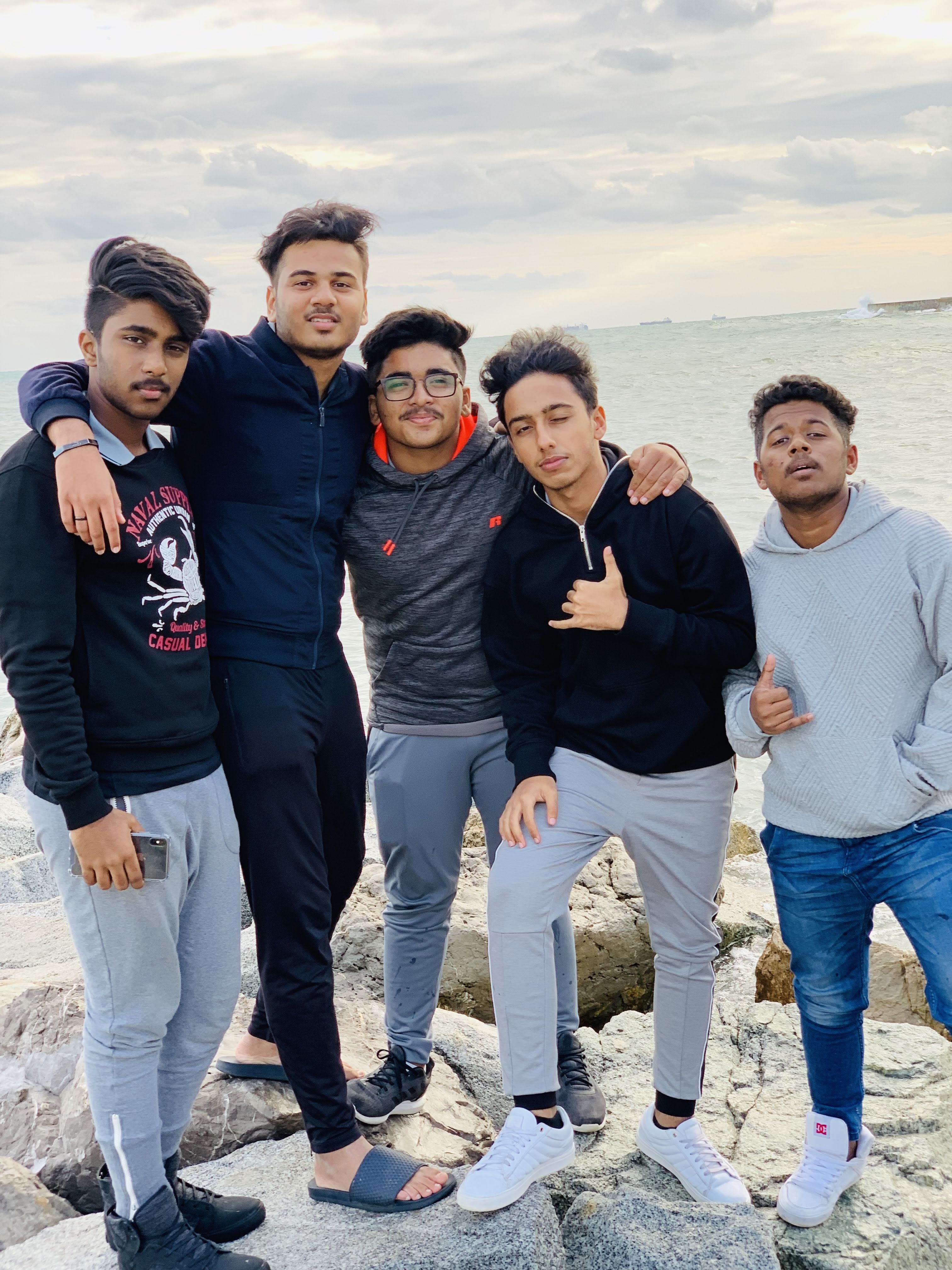
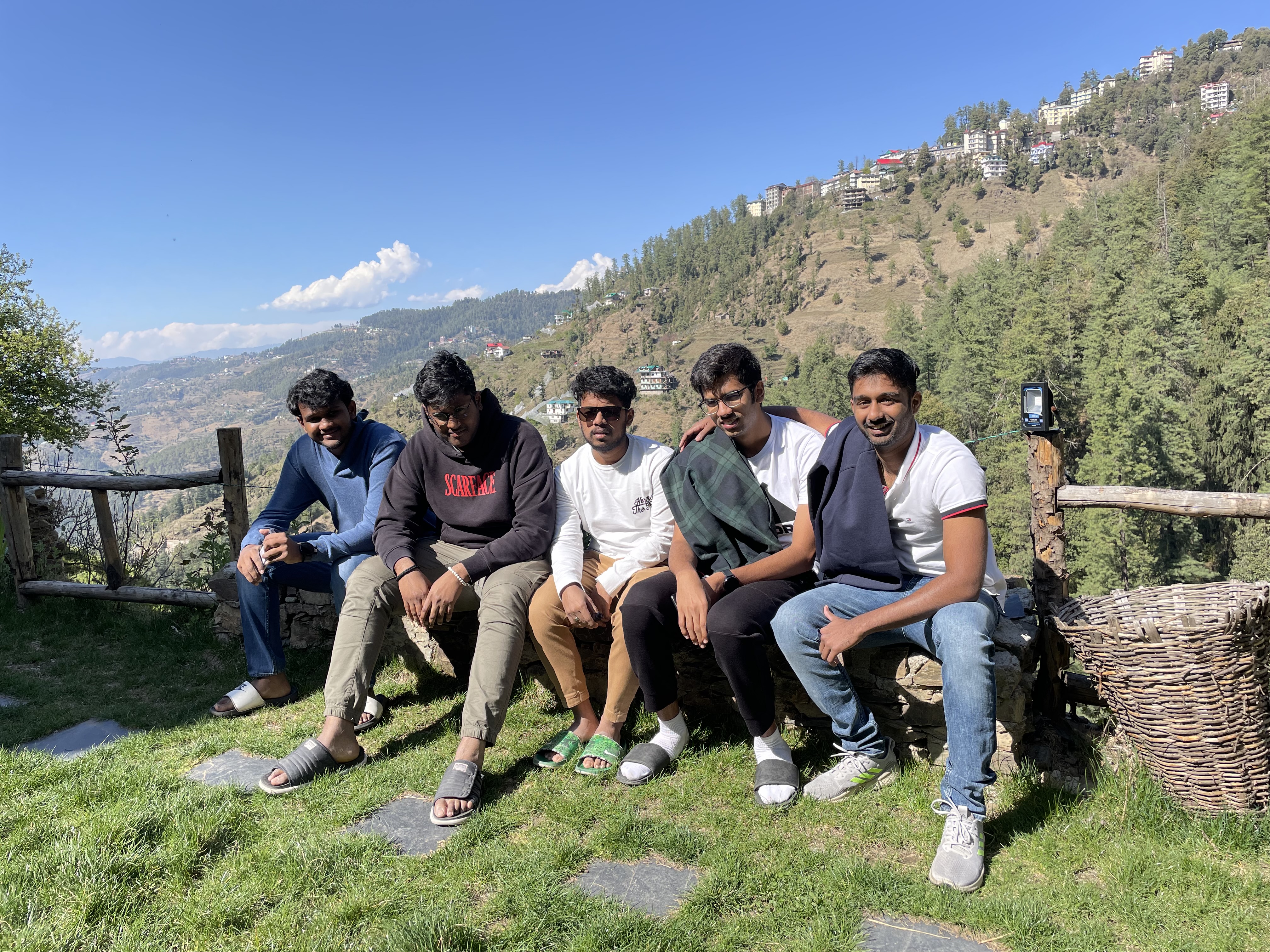
Trips, nights, moments that weren't about anything except being alive and having a good time.
All three at Jain. All three for things I'd probably do again. The school taught me a lot. Some of it was the suspensions.
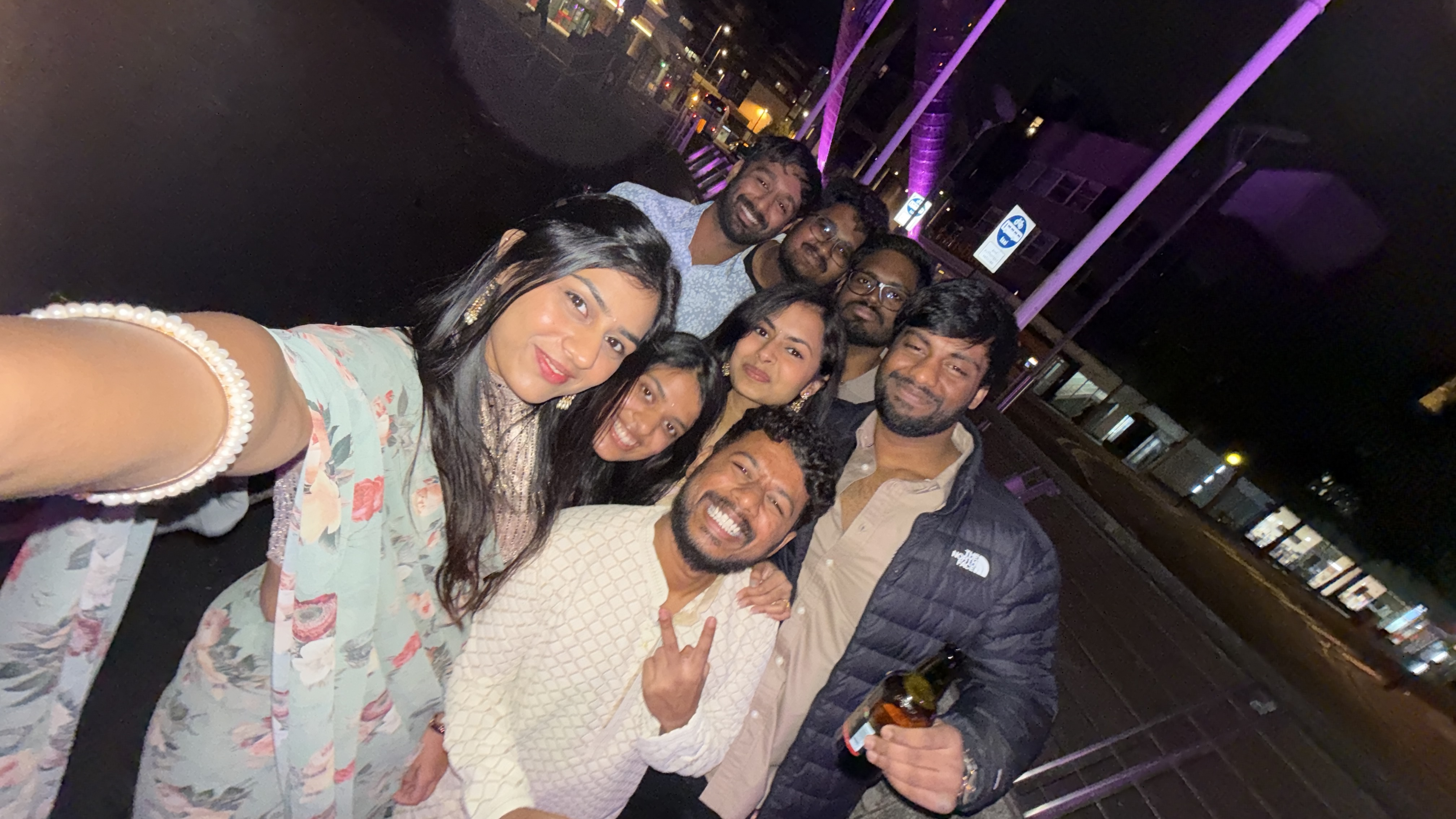
University, the friend group that became family, and the trips that I still bring up at every reunion.
I'll walk you through the CV, the cities, the chapters, Michael, my parents, and everything else. Takes about a minute.